When Owen Barfield writes about 'the evolution of consciousness' - he is talking process that is driving human development.
Barfield is not, therefore, regarding consciousness is something which respond-to historical change; but the opposite. So, he is saying that it was a change in the consciousness of Western Man that drove the scientific revolution and 'materialism': first consciousness changed and then science arose...
And therefore Barfield is contradicting any idea that 'modern Man's different way of thinking is a product of the scientific revolution. He was also contradicting the idea that the change in consciousness was due to natural selection. Rather Barfield is stating that changes in consciousness have been driven-by the unfolding of a divine plan (or 'destiny') for Man.
(A plan/ destiny aiming, ultimately, at the divinisation or theosis of Man - Man becoming a god (or full Son of God, as the New Testament terms it), with a god-like way of thinking.)
The development of new forms of human thinking is something which has (again according to Barfield) happened several times in human history, and indeed prehistory. However, in the past the changes in consciousness were driven at an unconscious level and required only the passive acceptance of Men.
Currently (at least since the Romantic movement of the late 1700s), and for the first time, we are experiencing an unconscious drive towards a new kind of consciousness that will not happen unless and until it becomes conscious and chosen.
So, our current situation is that we are being driven 'instinctually' (unconsciously) towards a new consciousness / a new way of thinking. But for it actually to happen requires that we become 1. consciously, explicitly aware of what is going-on; 2. then accept this destined change, but; 3. not just accept it, because we need also to; 4. actively embrace and work-at creating this change in ourselves.
In sum; the modern situation is that we must each, personally, want-to ally our-selves with the destined change in thought and consciousness, and must make efforts to make these changes in our-selves.
Or... it will not happen; and because we cannot go-back to an earleir state of consciousness (any more than an adolescent can become an actual child again), we will remain 'stuck' in the current phase of alienated consciousness - the problems from which will continue to be cumulative.
So far, very few individuals have done this four stage process of theosis - and the great majority of people in the West remain entirely unconscious of what is going-on behind-the-scenes.
Nonetheless, at an unconscious level - the instinctive drive towards the next, and final (because divine) qualitative development of thinking continues; and leads to many undesirable outcomes.
Thursday, 12 April 2018


The dead-eyed masses, the snake-eyed elites... more about the soul in the eyes
We should not complain about being excluded from the high levels of modern mainstream discourse - we should want an end to it, not to become complicit.
If someone does get-into a position of high status, power, fame; and remains there for more than a short time - it can easily be seen what happens to them: sooner rather than later they change (you can see it for yourself); they change from being one of the dead-eyed masses to one of the snake-eyed elite manipulators.
(Zombie to reptile...)
To be elite is to be an active servant of evil, necessarily: because The System is evil.
(The System is a godless materialist bureaucracy, which means totalitarian, which means intrinsically and necessarily destructive of Good - of even the possibility of Good).
To make a wall in the mind between types of thinking is first to suppress and then to imprison the real (divine) self: this is to become a dead-eyed one.
The light goes-out as the soul leaves the eyes.
The dead-eyed masses are, mentally, a loose collection of superficial selves - merely cognitive-processes: artificial, externally-driven, passive, unfree. The real self is gone, inaccessible - God-within-us has been imprisoned.
When the real self has-been walled-off, the eyes go dead. People are tools, not selves.
The snake-eyed ones are what our ancestors would have called 'demonically posessed' - that is, their real-divine self has not only been imprisoned, but replaced with demonic will.
Their eyes are not dead, but demonically-alive - snake-eyes: manipulative, lacking empathy; coldly enjoying only domination, deception, the destruction of beauty; the infliction of all types of suffering and (especially) of fear.
Sometimes a dead-eyed one will become 'useful enough' to become snake-eyed - the once dead eyes begin to glitter with calculating malice. This is promotion! This is to join the elites! The demon sits within, looking-out, gleeful at the situation.
To be dead-eyed is the norm among adults - although they can more-often be observed among teens, and even some younger children. It is the common response to the evil of the world - to ignore, cut-off, imprison the real self and develop a 'shell'. To do what 'works' instead of what we ought.
Only belief, faith, trust in the Holy Ghost is a defence - otherwise everybody succumbs, sooner or later. Just look around...
But the soul may rekindle - this can only be done consciously, by choice, deliberately. And it can only be done with external help.
The opportunity of repentance and belief is always there, but we our-selves must grasp it; and to do so we must know it to be real and Good.
The soul may re-kindle, the real-self may break-free and activate; and the eyes may come-alive, may light-up with a glowing warmth!
If someone does get-into a position of high status, power, fame; and remains there for more than a short time - it can easily be seen what happens to them: sooner rather than later they change (you can see it for yourself); they change from being one of the dead-eyed masses to one of the snake-eyed elite manipulators.
(Zombie to reptile...)
To be elite is to be an active servant of evil, necessarily: because The System is evil.
(The System is a godless materialist bureaucracy, which means totalitarian, which means intrinsically and necessarily destructive of Good - of even the possibility of Good).
To make a wall in the mind between types of thinking is first to suppress and then to imprison the real (divine) self: this is to become a dead-eyed one.
The light goes-out as the soul leaves the eyes.
The dead-eyed masses are, mentally, a loose collection of superficial selves - merely cognitive-processes: artificial, externally-driven, passive, unfree. The real self is gone, inaccessible - God-within-us has been imprisoned.
When the real self has-been walled-off, the eyes go dead. People are tools, not selves.
The snake-eyed ones are what our ancestors would have called 'demonically posessed' - that is, their real-divine self has not only been imprisoned, but replaced with demonic will.
Their eyes are not dead, but demonically-alive - snake-eyes: manipulative, lacking empathy; coldly enjoying only domination, deception, the destruction of beauty; the infliction of all types of suffering and (especially) of fear.
Sometimes a dead-eyed one will become 'useful enough' to become snake-eyed - the once dead eyes begin to glitter with calculating malice. This is promotion! This is to join the elites! The demon sits within, looking-out, gleeful at the situation.
To be dead-eyed is the norm among adults - although they can more-often be observed among teens, and even some younger children. It is the common response to the evil of the world - to ignore, cut-off, imprison the real self and develop a 'shell'. To do what 'works' instead of what we ought.
Only belief, faith, trust in the Holy Ghost is a defence - otherwise everybody succumbs, sooner or later. Just look around...
But the soul may rekindle - this can only be done consciously, by choice, deliberately. And it can only be done with external help.
The opportunity of repentance and belief is always there, but we our-selves must grasp it; and to do so we must know it to be real and Good.
The soul may re-kindle, the real-self may break-free and activate; and the eyes may come-alive, may light-up with a glowing warmth!
Wednesday, 11 April 2018
The new/ return-to animism and anthropomorphism: clarifying the key concepts from Steiner and Barfield
For the past couple of years I have understood the essence of Rudolf Steiner and Owen Barfield in relation to thinking, and during that time I have striven to re-express these more simply in order to make them more widely known. But it has been hard to achieve this goal, and my estimate of my own success has not been great.
For example the vital idea of 'polarity'. If you follow the previous link you will see some of my attempts at explicating polarity. However, I have come to realise that root problem relates to polarity being a metaphor derived from physics (i.e. from magnetism) - often with mathematical (e.g. geometric) aspects. And this makes it difficult to apply to the situation of human reality.
So Coleridge, for example, argued cogently and (to me) convincingly 200 years ago that we must have a logic based on polarity - but it is terribly difficult to grasp what he meant by this, and how we would go about such a change, and what positive difference it might make... William Blake seemed to express much the same conviction as Coleridge in some of his poems - especially the early aphorisms... but again it's a big jump from appreciating poetic 'paradoxes' to changing the structure of mainstream thinking.
But is, instead, we use biological metaphors and analogies to explain the same essential situation, then it is much more comprehensible. So, if we do our philosophy in terms of life, development, growth etc - then we find that we don't need a special concept of polarity. A living being generates contrasts and differences that can be distinguished (as we validly and usefully distinguish the several organs of a body, such as the heart); yet these distinctions are not separable (as we cannot separate the heart from the rest of the body, without killing both).
In fat, a thoroughgoing animism, or anthropomorphism, seems to be the best solution to many difficulties. And this has the added advantage of fitting with our own childhood experiences as well as the evolutionary-developmental-history of human consciousness. We can see that our task is to return to the simple, childlike animism and anthropomorphism - but this time not unconsciously and because we know no differently, but deliberately and in full awareness of what we are doing.
In a sense; Coleridge, Steiner and Barfield all knew this and explicitly said this; but they did not follow-through with the task of ejecting physics and mathematics from their explanatory schemata and replacing them with the child-like way of thinking of reality as alive, conscious, purposive - and with the relations between entities understood as relationships between beings.
Or consider the way that Steiner and Barfield describe the evolution of consciousness through various stages - and the possible future of the Imaginative Soul/ Final Participation. We seem to see a mechanical universe going-through various phases towards a predetermined outcome (and Steiner, especially, attaches all kinds of mystical-numbers of years to these phases and the way they play out - with predictions stretching millennia into the future).
How much clearer it is to state that the evolution of consciousness happens because God wants it to happen and influences the world accordingly; but only insofar as each Man chooses (from his agency) to ally himself with God's plan. Man's destiny is therefore what God hopes will happen, it can be achieved only incrementally, but each individual must choose to cooperate; and might well choose to oppose.
Animism and anthropomorphism are only 'childish' in a bad sense insofar as the child knows nothing different than them (and much the same applies to Men in simple, tribal hunter gatherer societies). Modern Man knows many different ways of thinking - especially the simplified-modelling of reality with mathematics and the sciences; and every model is partial and distorted and of ultimately unknowable generalisability... all of the explanations of mathematics and science are at bottom only simplified models that may, or may not, be useful for some specific purpose and situation.
Yet reality is as it always was. There is nothing childish about recognising that we were correct about the ultimate nature of reality when we were children and before Men had civilisations - after all nothing has ever disproved it!
For example the vital idea of 'polarity'. If you follow the previous link you will see some of my attempts at explicating polarity. However, I have come to realise that root problem relates to polarity being a metaphor derived from physics (i.e. from magnetism) - often with mathematical (e.g. geometric) aspects. And this makes it difficult to apply to the situation of human reality.
So Coleridge, for example, argued cogently and (to me) convincingly 200 years ago that we must have a logic based on polarity - but it is terribly difficult to grasp what he meant by this, and how we would go about such a change, and what positive difference it might make... William Blake seemed to express much the same conviction as Coleridge in some of his poems - especially the early aphorisms... but again it's a big jump from appreciating poetic 'paradoxes' to changing the structure of mainstream thinking.
But is, instead, we use biological metaphors and analogies to explain the same essential situation, then it is much more comprehensible. So, if we do our philosophy in terms of life, development, growth etc - then we find that we don't need a special concept of polarity. A living being generates contrasts and differences that can be distinguished (as we validly and usefully distinguish the several organs of a body, such as the heart); yet these distinctions are not separable (as we cannot separate the heart from the rest of the body, without killing both).
In fat, a thoroughgoing animism, or anthropomorphism, seems to be the best solution to many difficulties. And this has the added advantage of fitting with our own childhood experiences as well as the evolutionary-developmental-history of human consciousness. We can see that our task is to return to the simple, childlike animism and anthropomorphism - but this time not unconsciously and because we know no differently, but deliberately and in full awareness of what we are doing.
In a sense; Coleridge, Steiner and Barfield all knew this and explicitly said this; but they did not follow-through with the task of ejecting physics and mathematics from their explanatory schemata and replacing them with the child-like way of thinking of reality as alive, conscious, purposive - and with the relations between entities understood as relationships between beings.
Or consider the way that Steiner and Barfield describe the evolution of consciousness through various stages - and the possible future of the Imaginative Soul/ Final Participation. We seem to see a mechanical universe going-through various phases towards a predetermined outcome (and Steiner, especially, attaches all kinds of mystical-numbers of years to these phases and the way they play out - with predictions stretching millennia into the future).
How much clearer it is to state that the evolution of consciousness happens because God wants it to happen and influences the world accordingly; but only insofar as each Man chooses (from his agency) to ally himself with God's plan. Man's destiny is therefore what God hopes will happen, it can be achieved only incrementally, but each individual must choose to cooperate; and might well choose to oppose.
Animism and anthropomorphism are only 'childish' in a bad sense insofar as the child knows nothing different than them (and much the same applies to Men in simple, tribal hunter gatherer societies). Modern Man knows many different ways of thinking - especially the simplified-modelling of reality with mathematics and the sciences; and every model is partial and distorted and of ultimately unknowable generalisability... all of the explanations of mathematics and science are at bottom only simplified models that may, or may not, be useful for some specific purpose and situation.
Yet reality is as it always was. There is nothing childish about recognising that we were correct about the ultimate nature of reality when we were children and before Men had civilisations - after all nothing has ever disproved it!
God does not 'need' Man, but has a definite purpose in creating Man - from William Arkle
My own understanding is that the Creator, who is also God, is self sufficient in a sense. That is to imply that, although we need God, in every meaning of that term, God does not need us in the same way.
Against this we have to set the understanding that if God didn’t have a purpose which included us, no doubt He would not have gone to all this trouble of bringing us into existence. But to have a purpose in which we can play some part is quite a different thing from having an absolute need of us in the way that we have an absolute need of God.
In the way that a child needs its mother and father, we need God for sustenance and support of our own reality because our own reality rests upon the reality of God, and all our sustenance comes from that reality. But in quite a different way, I believe, our God wishes us to come to life, to come to a full expression of our potential, our Divine reality, and that must be for a purpose which is not essential to the Being of the Creator, but which may be essential to a particular longing and delight in the heart of the understanding of that Creator.
In simple words, I think that the Creator wishes to have other individual divine Beings who can be His friends with whom He can share the content of His own reality, with whom He can enter into conversation, understanding and discussion about possible experiments in living, in trying to go beyond the understanding that God has already, which to us, at our stage of development, seems infinite, but this is obviously only a relative term, and is not infinite to the Creator’s possible understanding.
Therefore we can suggest that it is within our understanding that the Creator wishes to go beyond His own highest qualities. It is not outside the bounds of possibility that this is a fact, and the Creator is aware of His desire, of His longing, not only to share His understanding with friends, but also to enter into life and living experiments with those friends, in such a way that their collective understanding can go beyond the qualities which the Creator has within His understanding already; qualities of beauty, of virtue, of character, which the Creator already knows about but which, in the depth of His spirit, He will never be satisfied to rest in.
An extract from the essay The Nature of God, from The Great Gift by William Arkle, 1977
Against this we have to set the understanding that if God didn’t have a purpose which included us, no doubt He would not have gone to all this trouble of bringing us into existence. But to have a purpose in which we can play some part is quite a different thing from having an absolute need of us in the way that we have an absolute need of God.
In the way that a child needs its mother and father, we need God for sustenance and support of our own reality because our own reality rests upon the reality of God, and all our sustenance comes from that reality. But in quite a different way, I believe, our God wishes us to come to life, to come to a full expression of our potential, our Divine reality, and that must be for a purpose which is not essential to the Being of the Creator, but which may be essential to a particular longing and delight in the heart of the understanding of that Creator.
In simple words, I think that the Creator wishes to have other individual divine Beings who can be His friends with whom He can share the content of His own reality, with whom He can enter into conversation, understanding and discussion about possible experiments in living, in trying to go beyond the understanding that God has already, which to us, at our stage of development, seems infinite, but this is obviously only a relative term, and is not infinite to the Creator’s possible understanding.
Therefore we can suggest that it is within our understanding that the Creator wishes to go beyond His own highest qualities. It is not outside the bounds of possibility that this is a fact, and the Creator is aware of His desire, of His longing, not only to share His understanding with friends, but also to enter into life and living experiments with those friends, in such a way that their collective understanding can go beyond the qualities which the Creator has within His understanding already; qualities of beauty, of virtue, of character, which the Creator already knows about but which, in the depth of His spirit, He will never be satisfied to rest in.
An extract from the essay The Nature of God, from The Great Gift by William Arkle, 1977
Tuesday, 10 April 2018
The completion of Romanticism and the Inklings
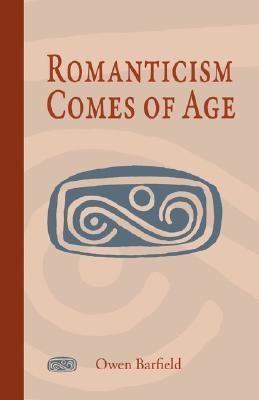
Owen Barfield's understanding of Romanticism as an uncompleted destiny is of primary importance to an integrated view of The Inklings. Barfield articulated this very clearly in Romanticism Comes of Age (1944) as well as subsequent books; but none of the other Inklings seems to have understood or been-persuaded-by the argument.
Read the whole thing at The Notion Club Papers: an Inklings blog...
Practical things to do that improve reality, forever

From Henry Works by DB Johnson
How may we actually, in practice, assist in sustaining and developing the spirit of Albion; or anything else in this mortal life that we love?
In a nutshell; we do it by being fully here and fully conscious - such that my own thinking of that time, place and nature is woven-into the evolving web of creation.
More at Albion Awakening...
Not even trying... Our cultural competence is declining - but that isn't the problem
I have been a contributor to that line of thought which asserts that intelligence has declined significantly over the past six to eight generations - and I would expand that argument to include a decline in human genetic fitness in general.
But that isn't the main problem - because even if we were more able - we would merely use our greater ability in pursuit of evil.
The problem is that our society is Not Even Trying to do Good or to be Good.
Instead we have an actively evil (i.e. deliberately destructive-of-Good) leadership class that is implementing its evil policies via and upon the materialistic, hedonic, despairing, and cowardly masses - who, by their unrepented acceptance of the evil agenda, thereby themselves become evil.
When we are pointed and marching (or shambling) in exactly the wrong direction, our increasing incompetence and inefficiency at moving rapidly is not the main problem.
We need to turn around.
The core priority, without which there can be no effective change, is to turn around: to face in the correct direction.
So, what is stopping us? Simply the fact that people have no idea of what good is.
Why have they lost a sense of what good is? Simply the fact that they have rejected God, hence they have rejected even the possibility of Good...
It is not just that people don't know Good - they don't know anything - people have become mere shells of temporary notions and emotions, passively responding to changing situations.
People are utterly unfree. They could be free, with a change of mind; but people choose not to be free; because they make assumptions about ultimate reality that destroy even the possibility of freedom.
People have given-up before they have begun.
And, what is worse, modern people won't even take responsibility for having rejected God, Good or the possibility of freedom! They have chosen mental slavery and rejected the gift of Heaven - yet they will not acknowledge that they had any choice in the matter!
Thus the decline in culture, science, technology, law, education... the decline in competence, efficiency, happiness, cooperation, idealism... all these are true but merely a froth on the surface of the real problem.
We might perhaps skim-off the froth - but the river still flows in the wrong direction.
But that isn't the main problem - because even if we were more able - we would merely use our greater ability in pursuit of evil.
The problem is that our society is Not Even Trying to do Good or to be Good.
Instead we have an actively evil (i.e. deliberately destructive-of-Good) leadership class that is implementing its evil policies via and upon the materialistic, hedonic, despairing, and cowardly masses - who, by their unrepented acceptance of the evil agenda, thereby themselves become evil.
When we are pointed and marching (or shambling) in exactly the wrong direction, our increasing incompetence and inefficiency at moving rapidly is not the main problem.
We need to turn around.
The core priority, without which there can be no effective change, is to turn around: to face in the correct direction.
So, what is stopping us? Simply the fact that people have no idea of what good is.
Why have they lost a sense of what good is? Simply the fact that they have rejected God, hence they have rejected even the possibility of Good...
It is not just that people don't know Good - they don't know anything - people have become mere shells of temporary notions and emotions, passively responding to changing situations.
People are utterly unfree. They could be free, with a change of mind; but people choose not to be free; because they make assumptions about ultimate reality that destroy even the possibility of freedom.
People have given-up before they have begun.
And, what is worse, modern people won't even take responsibility for having rejected God, Good or the possibility of freedom! They have chosen mental slavery and rejected the gift of Heaven - yet they will not acknowledge that they had any choice in the matter!
Thus the decline in culture, science, technology, law, education... the decline in competence, efficiency, happiness, cooperation, idealism... all these are true but merely a froth on the surface of the real problem.
We might perhaps skim-off the froth - but the river still flows in the wrong direction.
Monday, 9 April 2018
Answering the problem of understanding how sin does Not mar Heaven
Creation doesn't reverse - so how may the consequences of bad choices be dealt with?
On the one hand, all necessarily choices have consequences... or else the choices would not be real; on the other hand, this seems to suggest that every sin by every person who ever lived will be 'woven-into' the web of history and will permanently mar it.
Creation will therefore (apparently) be 'imperfect' - and yet Christians are (apparently) promised some kind of perfection in the Heavenly state...
The problem with the above statement is that it has the inbuilt assumption of life tending towards a final static state - like a carpet that has-been woven. It also has that nasty word/ concept of 'perfection' inbuilt - which implies that Heaven is a single, predetermined and preplanned state of perfection - any departure from which is therefor a shattering of that perfection...
Nonetheless, if Heaven is love, and yet people so often reject love, and this has unloving consequences - then how can Heaven be a loving state?
Well, there is an answer - a satisfying answer! - and it is underpinned by the proper (as I regard it) understanding of love: specifically of love.
And therefore we already know the answer, because we all have sufficiently experienced love and its workings (even if it was more of a lack-of and yearning-for love - which is built in as a hope and indeed expectation).
Reality is a process in time, changing, dynamic - it is creation, which entails change; it is love, which entails change - reality is not a timeless state; and Heaven is therefore an ideal situation, but not a state-of-perfection.
(In fact, process is too physics-y a word for it, so is dyynamic - biological metaphors are preferable: reality is life, growth, development, transformation, evolution, consciousness etc...)
Therefore Heaven is not a 'blueprint' (any departure from which is necessarily im-perfect/ flawed/ not-Heaven...) but instead a matter of establishing that ideal situation.
Another way of thinking about it is that Heaven is not something imposed upon us from above, not something we are fitted-into; rather heaven is a 'bottom-up process of discovering, learning, loving, creating...
It is not built to a plan, but generated moment-by-moment by free, agent, conscious entities...
We have perhaps already experienced this (at least so far as love goes) - but did not know we were experiencing it; I mean in early childhood in the context of loving and being loved. We just lived immersed in the current moment - and when that was good, then it was ideal.
But Heaven withdrew from us even as the capacity for knowledge arose - the capacity to know can arise only by separation from what is experienced. And as we know, we fear; so that the current is no longer ideal, since we fear that it may be - will be - lost.
Consciousness ejects us from Heaven. (At first...)
Insofar as we know, of can imagine, the happiness of a loving family through generations; we can know or imagine Heaven.
Heaven is a return to what we have already experienced, but this time with consciousness. We return to the immersive experience of happy childhood in a loving family; while knowing that this is happening, that this is the situation we are in.
But instead of immersion we have creation. Instead of taking everything for granted, being swept-along by events, just in a state of 'being'; in Heaven we participate in God's work of creation.
That is what it is to be - like Jesus - a Son of God. A co-creator with The Father.
Not only to be part-of creation; not only to be an observer of creation; but to become a participant in creation.
That is - indeed - our 'job' in Heaven.
So, how does sin not mar Heaven?
Because sin does not mar the family - not when there is repentance and love.
All families are made-up entirely of sinners - yet even on earth and during mortal life we know (because we have experienced) that loving families can be ideal, for periods of time.
And that which is ideal, is not marred.
On the one hand, all necessarily choices have consequences... or else the choices would not be real; on the other hand, this seems to suggest that every sin by every person who ever lived will be 'woven-into' the web of history and will permanently mar it.
Creation will therefore (apparently) be 'imperfect' - and yet Christians are (apparently) promised some kind of perfection in the Heavenly state...
The problem with the above statement is that it has the inbuilt assumption of life tending towards a final static state - like a carpet that has-been woven. It also has that nasty word/ concept of 'perfection' inbuilt - which implies that Heaven is a single, predetermined and preplanned state of perfection - any departure from which is therefor a shattering of that perfection...
Nonetheless, if Heaven is love, and yet people so often reject love, and this has unloving consequences - then how can Heaven be a loving state?
Well, there is an answer - a satisfying answer! - and it is underpinned by the proper (as I regard it) understanding of love: specifically of love.
And therefore we already know the answer, because we all have sufficiently experienced love and its workings (even if it was more of a lack-of and yearning-for love - which is built in as a hope and indeed expectation).
Reality is a process in time, changing, dynamic - it is creation, which entails change; it is love, which entails change - reality is not a timeless state; and Heaven is therefore an ideal situation, but not a state-of-perfection.
(In fact, process is too physics-y a word for it, so is dyynamic - biological metaphors are preferable: reality is life, growth, development, transformation, evolution, consciousness etc...)
Therefore Heaven is not a 'blueprint' (any departure from which is necessarily im-perfect/ flawed/ not-Heaven...) but instead a matter of establishing that ideal situation.
Another way of thinking about it is that Heaven is not something imposed upon us from above, not something we are fitted-into; rather heaven is a 'bottom-up process of discovering, learning, loving, creating...
It is not built to a plan, but generated moment-by-moment by free, agent, conscious entities...
We have perhaps already experienced this (at least so far as love goes) - but did not know we were experiencing it; I mean in early childhood in the context of loving and being loved. We just lived immersed in the current moment - and when that was good, then it was ideal.
But Heaven withdrew from us even as the capacity for knowledge arose - the capacity to know can arise only by separation from what is experienced. And as we know, we fear; so that the current is no longer ideal, since we fear that it may be - will be - lost.
Consciousness ejects us from Heaven. (At first...)
Insofar as we know, of can imagine, the happiness of a loving family through generations; we can know or imagine Heaven.
Heaven is a return to what we have already experienced, but this time with consciousness. We return to the immersive experience of happy childhood in a loving family; while knowing that this is happening, that this is the situation we are in.
But instead of immersion we have creation. Instead of taking everything for granted, being swept-along by events, just in a state of 'being'; in Heaven we participate in God's work of creation.
That is what it is to be - like Jesus - a Son of God. A co-creator with The Father.
Not only to be part-of creation; not only to be an observer of creation; but to become a participant in creation.
That is - indeed - our 'job' in Heaven.
So, how does sin not mar Heaven?
Because sin does not mar the family - not when there is repentance and love.
All families are made-up entirely of sinners - yet even on earth and during mortal life we know (because we have experienced) that loving families can be ideal, for periods of time.
And that which is ideal, is not marred.
Groupishness has gone as a force for Good - the future is a spiritual alliance of those individuals who remember the creator
Materialist leftism is triumphant throughout the world leadership, and leftism is anti-Good. Attempts to organise groups to oppose it will not get anywhere - being wrong, doomed, futile etc.
What - then - is pro-Good is this world. The answer is that Good is derived only from specific individual persons (and perhaps not many of them).
Groupishness really is gone as a basis for the future - nobody now truly regards the group as superior to the individual, at least not in The West. For example - whatever they claim - I don't believe that those who affect to propound reaction really regard the group as superior to their own judgement.
Even the modern left - who so often use arguments or rationalisations about democracy, the people, the majority, consensus, the greater good, the intrinsic deservingness of oppressed groups... use these arguments cynically, expediently and dishonestly. The mass majority of leftists are, if anything, merely scared of 'the group' (whatever that group may be) - rather than regarding a group as intrinsically more-valid or more-virtuous than themselves (as their leftist ancestors sometimes used-to).
The significant division is first between those who regard the individual as a material entity and those who regard the individual as spiritual. Then - between those who regard the individual as spiritual - those who are on the side of creation (and God); and those who set themselves against creation (and ally with the demonic powers).
The new, Good individualism is therefor unified as a common alliance, all working on the same side, which is the side of reality; which is the side of creation; which is that which has been and is-being created.
The alliance for is of those who (in William Wildblood's phrase) Remember the Creator - or try to do so and repent when they do not.
These look out upon the world as a creation, ongoing - created by a personal God whose nature and character is known to them; and with whom they - voluntarily and from love - affiliate.
They do so because they believe-in Jesus Christ - that is to say they trust, they have faith in, Jesus; who created this world - and His Father, who is also Our Father.
And when the creator loves you, personally; that is the best possible reason for belief/ trust/ faith - and for alliance with creation.
How such a spiritual alliance of individuals will work-out in the Big Bad World is something I cannot predict and can barely imagine.
But I know that if it is what The Creator wants to happen - because it is what is best for us; then it will (somehow or another) be woven-into the always-being-generated web of reality.
And I also know that we should not be afraid nor should we be motivated by fear: faith casts-out fear, and fear is the opposite of love.
What - then - is pro-Good is this world. The answer is that Good is derived only from specific individual persons (and perhaps not many of them).
Groupishness really is gone as a basis for the future - nobody now truly regards the group as superior to the individual, at least not in The West. For example - whatever they claim - I don't believe that those who affect to propound reaction really regard the group as superior to their own judgement.
Even the modern left - who so often use arguments or rationalisations about democracy, the people, the majority, consensus, the greater good, the intrinsic deservingness of oppressed groups... use these arguments cynically, expediently and dishonestly. The mass majority of leftists are, if anything, merely scared of 'the group' (whatever that group may be) - rather than regarding a group as intrinsically more-valid or more-virtuous than themselves (as their leftist ancestors sometimes used-to).
The significant division is first between those who regard the individual as a material entity and those who regard the individual as spiritual. Then - between those who regard the individual as spiritual - those who are on the side of creation (and God); and those who set themselves against creation (and ally with the demonic powers).
The new, Good individualism is therefor unified as a common alliance, all working on the same side, which is the side of reality; which is the side of creation; which is that which has been and is-being created.
The alliance for is of those who (in William Wildblood's phrase) Remember the Creator - or try to do so and repent when they do not.
These look out upon the world as a creation, ongoing - created by a personal God whose nature and character is known to them; and with whom they - voluntarily and from love - affiliate.
They do so because they believe-in Jesus Christ - that is to say they trust, they have faith in, Jesus; who created this world - and His Father, who is also Our Father.
And when the creator loves you, personally; that is the best possible reason for belief/ trust/ faith - and for alliance with creation.
How such a spiritual alliance of individuals will work-out in the Big Bad World is something I cannot predict and can barely imagine.
But I know that if it is what The Creator wants to happen - because it is what is best for us; then it will (somehow or another) be woven-into the always-being-generated web of reality.
And I also know that we should not be afraid nor should we be motivated by fear: faith casts-out fear, and fear is the opposite of love.
Reading the fourth gospel in the way it was meant to be read
As I have mentioned several times, I am engaged on an intense, poetic reading of the fourth Gospel ('John's) in which I read with the assumptions that this is the primary and most valid communication concerning Jesus.
Why? Because the author of this gospel is the beloved disciple who is Lazarus (-raised), who is the brother of Mary of Bethany, who is the same person as Mary Magdalene, who is the wife of Jesus (them having married initially in a normal Jewish way in Cana, and then in some heavenly and eternal fashion in Bethany: the episode of the spikenard ointment).
The author of the Fourth Gospel was therefore Jesus's best friend, an ex-disciple of John the Baptist (who had an essential role in the ministry of Jesus), Jesus's brother-in-law on earth and eternally, and himself an eternal being - the first resurrected Man.
The primary validity of such a 'source' is self-evident.
My assumption is that at the time of writing of the fourth gospel, its readers will all have known the identity of the author, his nature, and his close and unique relationship with Jesus. This is therefore taken for granted in the text; and the text makes perfect sense in light of such knowledge.
This is certainly not an arcane, secret, occult, or gnostic interpretation of the fourth gospel! Quite the opposite. The fourth gospel was and is perfectly clear, its message was and is on the surface and not hidden between the lines. Its message is available to all and not restricted to the 'initiated'.
The fourth gospel is simply the story of Jesus written by such a man as Lazarus was known to be, as clear as possible given the nature of the material, and in the 'poetic' way that such matters were written - at that time and and in that place.
By 'poetic' reading, I mean that I am reading in a manner that empathises with the consciousness of the author and era, and therefore regards the language as poetry not prose.
Naturally, I am reading and re-reading the 'King James'/ Authorised translation of the gospel; as being the only divinely-inspired English version. And the KJB is poetic - indeed it is one of he greatest works of literature in its language, or any language.
Since poetic language (like all ancient language) is poetic, it cannot be translated word-by-word, nor concept-by-concept. Ancient languages meant many things at once in ways that are now impossible to express, except by more poetry (and poetry is currently extinct, or all-but). The nearest - which is not very near - is a list of semi-synonyms based on etymology; from-which a jump of sympathy, empathy, identification may be helped.
Furthermore, my understanding is that because the fourth gospel is by far the most valid and important part of the Bible - to understand Jesus and his work and message I need initially to understand it from the fourth gospel alone - without the endless-distractions and misleading tendencies of attempting to triangulate other and less valid New and Old Testament sources.
In other words, if I can attain clarity of the correct issues from the fourth gospel, regarded as valid; then this understand may then be applied to the other parts of the Bible (and indeed other sources).
Note: The method of the fourth gospel seems to be in working through great sweeps of text which clarify; by approaching a question or point from many 'angles', and aiming to remove ambiguities or incomprehension. It seems necessary to read, therefore, at sufficient length to notice these convergences. It is proving to be an astonishingly rich experience, yielding wave after wave of clarification and insight.
Most important is the essence of what Jesus offers - that he variously calls by terms such as the word meaning 'thought', making, creation, life, light... So that Life is the key word/ concept; and everlasting life is the main thing that Jesus brings or offers.
Everlasting life (and light) is everlasting creativity, generation - it is thus more like biology (with development and growth); than it is like physics. Therefore, what Jesus offers us is something 'in' time; it is active, dynamic, changing as living entities - it is not a blueprint for some final static state.
And he offers this on the basis that we 'believe' him - that is we trust him, have faith and confidence in him, love and esteem him, ally with him - and in doing so we ally with the primary creator who is Jesus's Father, with whom Jesus is in complete accord and whose mission he is fulfilling.
It really does seem that simple (and that complex): Jesus offers everlasting life (which is a situation arrived at via death and by bodily resurrection) by-means-of our attitude to the person of Jesus.
Simple, but...
There are many passages in which, by his attitude and teachings, Jesus is clear that many or most people will-not-want-to-take-up his offer of everlasting life - for various reasons.
It seems that it is a mistake to try and persuade people that they want everlasting life.
Jesus works by trying to make clear the situation, and the nature of what he offers, what he brings; he explains things in several ways - with parables, and sayings, with miracles, and with analogies. Sometimes Jesus answers direct questions - but often there comes a point when he refuses to say any more to people; when he realises that they understand and know but reject his gift.
In effect: You asked me, I told you. You will Not accept my answer, yet you ask me again! I am not going to repeat myself. You ask for evidence, I give you evidence. You will not accept the evidence yet you ask for more evidence!
My distinct impression is that Jesus did not expect his offer to be taken-up by everybody; he anticipated that everlasting life would be rejected by many people.
'Belief' in Jesus is clearly something conceptually simple (albeit that concepts such as belief were then far more complex/ multi-valent/ symbolic than they are now) and potentially instantaneous.
But this was when Jesus was physically present on earth in his mortal, or resurrected, life - and therefore his 'influence' was spatially limited.
Jesus explains to his disciples that this limitation will be overcome after he ascends to his Father, when he will send the Holy Ghost or Comforter - who will be an improvement on the physical presence of Jesus.
We moderns find this hard to believe, but Jesus was quite definite: it is better to have the Holy Ghost than the physical presence of Jesus. Because the Holy Ghost provides what Jesus did - but universally and from within each person.
Jesus makes clear that the Holy Ghost is in fact himself - the Holy Ghost is our direct and personal contact and communication with the ascended Jesus; that, without any other source, potentially provides every person with knowledge and guidance sufficient for eternal life.
Sometimes Jesus is talking to and about the disciples as a specific group - it was clearly of great importance that the disciples be a coherent and loving group after Jesus had ascended; at other times he seems to be to be referring to everybody alive and hereafter...
But, rather than the work of the disciples and their descendants; I think the fourth gospel is telling us that the core 'method' of Christianity is the direct contact with Jesus himself, in his universal form as the Holy Ghost/ Comforter.
Much more can, and I hope will, be said on these matters.
Why? Because the author of this gospel is the beloved disciple who is Lazarus (-raised), who is the brother of Mary of Bethany, who is the same person as Mary Magdalene, who is the wife of Jesus (them having married initially in a normal Jewish way in Cana, and then in some heavenly and eternal fashion in Bethany: the episode of the spikenard ointment).
The author of the Fourth Gospel was therefore Jesus's best friend, an ex-disciple of John the Baptist (who had an essential role in the ministry of Jesus), Jesus's brother-in-law on earth and eternally, and himself an eternal being - the first resurrected Man.
The primary validity of such a 'source' is self-evident.
My assumption is that at the time of writing of the fourth gospel, its readers will all have known the identity of the author, his nature, and his close and unique relationship with Jesus. This is therefore taken for granted in the text; and the text makes perfect sense in light of such knowledge.
This is certainly not an arcane, secret, occult, or gnostic interpretation of the fourth gospel! Quite the opposite. The fourth gospel was and is perfectly clear, its message was and is on the surface and not hidden between the lines. Its message is available to all and not restricted to the 'initiated'.
The fourth gospel is simply the story of Jesus written by such a man as Lazarus was known to be, as clear as possible given the nature of the material, and in the 'poetic' way that such matters were written - at that time and and in that place.
By 'poetic' reading, I mean that I am reading in a manner that empathises with the consciousness of the author and era, and therefore regards the language as poetry not prose.
Naturally, I am reading and re-reading the 'King James'/ Authorised translation of the gospel; as being the only divinely-inspired English version. And the KJB is poetic - indeed it is one of he greatest works of literature in its language, or any language.
Since poetic language (like all ancient language) is poetic, it cannot be translated word-by-word, nor concept-by-concept. Ancient languages meant many things at once in ways that are now impossible to express, except by more poetry (and poetry is currently extinct, or all-but). The nearest - which is not very near - is a list of semi-synonyms based on etymology; from-which a jump of sympathy, empathy, identification may be helped.
Furthermore, my understanding is that because the fourth gospel is by far the most valid and important part of the Bible - to understand Jesus and his work and message I need initially to understand it from the fourth gospel alone - without the endless-distractions and misleading tendencies of attempting to triangulate other and less valid New and Old Testament sources.
In other words, if I can attain clarity of the correct issues from the fourth gospel, regarded as valid; then this understand may then be applied to the other parts of the Bible (and indeed other sources).
Note: The method of the fourth gospel seems to be in working through great sweeps of text which clarify; by approaching a question or point from many 'angles', and aiming to remove ambiguities or incomprehension. It seems necessary to read, therefore, at sufficient length to notice these convergences. It is proving to be an astonishingly rich experience, yielding wave after wave of clarification and insight.
Most important is the essence of what Jesus offers - that he variously calls by terms such as the word meaning 'thought', making, creation, life, light... So that Life is the key word/ concept; and everlasting life is the main thing that Jesus brings or offers.
Everlasting life (and light) is everlasting creativity, generation - it is thus more like biology (with development and growth); than it is like physics. Therefore, what Jesus offers us is something 'in' time; it is active, dynamic, changing as living entities - it is not a blueprint for some final static state.
And he offers this on the basis that we 'believe' him - that is we trust him, have faith and confidence in him, love and esteem him, ally with him - and in doing so we ally with the primary creator who is Jesus's Father, with whom Jesus is in complete accord and whose mission he is fulfilling.
It really does seem that simple (and that complex): Jesus offers everlasting life (which is a situation arrived at via death and by bodily resurrection) by-means-of our attitude to the person of Jesus.
Simple, but...
There are many passages in which, by his attitude and teachings, Jesus is clear that many or most people will-not-want-to-take-up his offer of everlasting life - for various reasons.
It seems that it is a mistake to try and persuade people that they want everlasting life.
Jesus works by trying to make clear the situation, and the nature of what he offers, what he brings; he explains things in several ways - with parables, and sayings, with miracles, and with analogies. Sometimes Jesus answers direct questions - but often there comes a point when he refuses to say any more to people; when he realises that they understand and know but reject his gift.
In effect: You asked me, I told you. You will Not accept my answer, yet you ask me again! I am not going to repeat myself. You ask for evidence, I give you evidence. You will not accept the evidence yet you ask for more evidence!
My distinct impression is that Jesus did not expect his offer to be taken-up by everybody; he anticipated that everlasting life would be rejected by many people.
'Belief' in Jesus is clearly something conceptually simple (albeit that concepts such as belief were then far more complex/ multi-valent/ symbolic than they are now) and potentially instantaneous.
But this was when Jesus was physically present on earth in his mortal, or resurrected, life - and therefore his 'influence' was spatially limited.
Jesus explains to his disciples that this limitation will be overcome after he ascends to his Father, when he will send the Holy Ghost or Comforter - who will be an improvement on the physical presence of Jesus.
We moderns find this hard to believe, but Jesus was quite definite: it is better to have the Holy Ghost than the physical presence of Jesus. Because the Holy Ghost provides what Jesus did - but universally and from within each person.
Jesus makes clear that the Holy Ghost is in fact himself - the Holy Ghost is our direct and personal contact and communication with the ascended Jesus; that, without any other source, potentially provides every person with knowledge and guidance sufficient for eternal life.
Sometimes Jesus is talking to and about the disciples as a specific group - it was clearly of great importance that the disciples be a coherent and loving group after Jesus had ascended; at other times he seems to be to be referring to everybody alive and hereafter...
But, rather than the work of the disciples and their descendants; I think the fourth gospel is telling us that the core 'method' of Christianity is the direct contact with Jesus himself, in his universal form as the Holy Ghost/ Comforter.
Much more can, and I hope will, be said on these matters.
Sunday, 8 April 2018
This IS the best of possible worlds - for me, for you; in an eternal context...
William Wildblood has done an important post at his Meeting the Masters blog; which he gives the provocative title The World Is Perfect.
This truth flies in the face of common modern morality to such as extent that probably most people would regard it as actively-evil, insane or seriously-dumb even to consider the validity of the idea that my life and your life, and the lives of everybody who ever has been - has been the life we most needed (although almost never is it the life we ought-to lead, since people apparently very seldom learn from their experiences).
1. The first step is to recognise that this mortal life, the life between biological conception and death, is on the one hand extremely-important; and also on the other hand not the only life - and especially not the end of our lives.
We have an eternity to live after mortality; therefore much of what happens during this mortal life can be understood and made sense of only in that context.
2. As Christians; we know that God was the creator, and that we live in the midst of his creation; also that God is our loving Father and designed creation for our (ultimate, eternal) benefit.
For modern people, this entails that we reject the almost ubiquitous (and incoherent) idea that this world is some mixture of rigidly-determined and random; that each thing is just an effect of some previous cause - without end or beginning; or else things happens unpredictably and for no reason.
By contrast, we need to assume that everything happens for a reason and by some intent or another.
This means that the world is, ultimately, alive and conscious and therefore intentional - there are ultimate reasons for everything (although, naturally, we don't personally know the reason for more than a minuscule number of these happenings - but that they do have a reason, we do know).
3. Another closely-related modern confusion that we need consciously to reject is that there is no such thing as 'free will'.
A better world for free will is agency in the old sense of the word; or autonomy... meaning simply that an autonomous entity is one from-which intentions, motivations, thoughts can arise (without being-caused).
That is, a free entity is one which is (to some extent) its own cause, or a source of causes.
That is just what-agency-is.
(It is a metaphysical assumption that there are such entities. It is not something to be proved - and neither can it be proved. Determinism of everything, and the possibility of randomness are equally metaphysical assumptions - and indeed they are very recent metaphysical assumptions, held by only a small minority of modern people. The possibility of coexistant determinism and randomness is also a meatphysical assumptino - and one which is incoherent. Another common but incoherent assumption, for example in physics, is that something may occur randomly and yet also be statistically predictable.)
There are many agent entities in this world (for example people, but others as well) - and there is also God.
This means that this actual world we experience is on the one hand God's on-going creation and it is also the outcomes of multiple autonomous entities.
4. For a Christian, God has a destiny - a hoped-for development - for each one of us, as individuals.
God does not want every human to be the same ('clones'); but like any good parent, God rejoices in the differences between his children, and loves to see each (beloved) child develop uniquely and in-line with his own nature, abilities and aspirations.
At the same time, God's creation is bound together by love - and the unique development of each individual must cohere with that of each other in a heavenly harmony.
The first commandment is love God and the second to love our 'neighbours' - and these are the prime commandments - thus it is love, and only love, which enables creation to be Good.
5. This is the world which we each inhabit, as mortals.
God is always present and active in his creation - but mostly 'behind the scenes' - because it is a major part of the divine plan that we each develop our own uniqueness in our own way: actively not passively - by free choice and not by compulsion.
By 'behind the scenes' I mean that God ensures that the experiences we most need for our development will come our way. This is not something we need concern ourselves about - our proper concern is to experience these experiences fully (and not, for example - a common modern response - to avoid thinking about them) and to learn from them.
Each of us has different learning priorities; plus some people learn fast, while others do not learn at all. Others draw the opposite conclusions from their experiences than God intends... all of this is a necessary and intrinsic part of the free will/ agency/ autonomy of people.
So, often we need multiple repetitions before we learn that which we (personally) most need to learn), often we need extremely harsh experiences before we learn. (This is a matter of common observation and experience.)
And at the end of the day (as Jesus stated clearly) there were and are people who simply will not learn, who will neither listen to nor hear The Word. They can be given all sorts of experiences - they are shown miracles, shown love, hear or see divine communications - yet they will not learn.
This is because people really are autonomous agents. That is what people are. Necessarily. For better And for worse.
(And for worse, perhaps more frequently than for better...)
6. There are many and vital inferences to be drawn form the previous five points; but one that requires specific emphasis is that we must personally and in our own lives (as Christians) believe that this is indeed the best of possible worlds.
This is just not 'an option' - it is mandatory.
Actually understanding this is somewhat difficult, given the number of lies and errors that surround us, and the modern disinclination to think. And having understood it - it is difficult to live-by that understanding. Indeed, this is precisely one of the lessons we must learn!
So we must know this for ourselves, and for our own life. And we can expect that God will ensure that we have all the understanding we need for this purpose.
But we must Not try (and - always - fail) to explain why every detail of God''s creation is the best possible experience for every single one of the people alive now and throughout human history!
How could we possibly know this; and why would we need to?
So when someone comes-up with a (real or imagined, factual or garbled) description of some innocent or good person who either seems to have suffered very badly during mortal life - or some evil person who apparently had a gratifying (healthy, high status, powerful, cheerful...) mortal life... And when such 'examples' are put forward as contradicting the assertion tha this is the best possible world... We should never allow ourselves to be drawn-into trying to explain how exactly this example fitted into God's plan for creation!
(What was ridiculous about Dr Pangloss in Voltaire's Candide was not his assertion that this was the best of possible worlds; but his ludicrous and arrogant attempts to explain the precise reason for why every possible disaster to every individual actually contributed to the greater-ultimate-good, often in this mortal world. As if Pangloss personally knew the entirety of God's intent and creation's-causal web!)
We do not know all persons destinies, we do not know their inner minds and how they were actually gratified or suffered, we do not know what happens after a person dies...
In sum, we personally cannot link the events of someone else's mortal life with their individual destiny (and what that person most needed to know, or whether they indeed learned it); nor with the lives of all other people (whom God equally loves, as his children - albeit we are wicked children, he still loves us and want the best for every one of us); nor with the other entities of God's creation; nor can we understand how a person's mortal life was linked with their post-mortal eternal and resurrected life.
We cannot do such things, and if we try to do so - and to persuade another person of our rightness - then we only reveal our ignorance and makes ourselves ridiculous.
On the other hand, it is perfectly reasonable and to-be-expected that we can know a great deal of this kind of thing about ourselves; insofar as such knowledge is helpful to the main purposes of our mortal life - much of which is about learning to be active agents.
So it is quite likely that God wishes us to work-out such things for ourselves (rather than simply 'telling us') - partly because that is the basis mode of mortal life, and partly because that is the only way that many people can actually learn.
It is a commonly observed fact that many people can only learn many important things the hard way.
And when these 'things' that need to be learned are extremely important (for eternity), then that means that 'the hard way' is precisely the way that many such things will, of necessity, actually be learned.
This truth flies in the face of common modern morality to such as extent that probably most people would regard it as actively-evil, insane or seriously-dumb even to consider the validity of the idea that my life and your life, and the lives of everybody who ever has been - has been the life we most needed (although almost never is it the life we ought-to lead, since people apparently very seldom learn from their experiences).
1. The first step is to recognise that this mortal life, the life between biological conception and death, is on the one hand extremely-important; and also on the other hand not the only life - and especially not the end of our lives.
We have an eternity to live after mortality; therefore much of what happens during this mortal life can be understood and made sense of only in that context.
2. As Christians; we know that God was the creator, and that we live in the midst of his creation; also that God is our loving Father and designed creation for our (ultimate, eternal) benefit.
For modern people, this entails that we reject the almost ubiquitous (and incoherent) idea that this world is some mixture of rigidly-determined and random; that each thing is just an effect of some previous cause - without end or beginning; or else things happens unpredictably and for no reason.
By contrast, we need to assume that everything happens for a reason and by some intent or another.
This means that the world is, ultimately, alive and conscious and therefore intentional - there are ultimate reasons for everything (although, naturally, we don't personally know the reason for more than a minuscule number of these happenings - but that they do have a reason, we do know).
3. Another closely-related modern confusion that we need consciously to reject is that there is no such thing as 'free will'.
A better world for free will is agency in the old sense of the word; or autonomy... meaning simply that an autonomous entity is one from-which intentions, motivations, thoughts can arise (without being-caused).
That is, a free entity is one which is (to some extent) its own cause, or a source of causes.
That is just what-agency-is.
(It is a metaphysical assumption that there are such entities. It is not something to be proved - and neither can it be proved. Determinism of everything, and the possibility of randomness are equally metaphysical assumptions - and indeed they are very recent metaphysical assumptions, held by only a small minority of modern people. The possibility of coexistant determinism and randomness is also a meatphysical assumptino - and one which is incoherent. Another common but incoherent assumption, for example in physics, is that something may occur randomly and yet also be statistically predictable.)
There are many agent entities in this world (for example people, but others as well) - and there is also God.
This means that this actual world we experience is on the one hand God's on-going creation and it is also the outcomes of multiple autonomous entities.
4. For a Christian, God has a destiny - a hoped-for development - for each one of us, as individuals.
God does not want every human to be the same ('clones'); but like any good parent, God rejoices in the differences between his children, and loves to see each (beloved) child develop uniquely and in-line with his own nature, abilities and aspirations.
At the same time, God's creation is bound together by love - and the unique development of each individual must cohere with that of each other in a heavenly harmony.
The first commandment is love God and the second to love our 'neighbours' - and these are the prime commandments - thus it is love, and only love, which enables creation to be Good.
5. This is the world which we each inhabit, as mortals.
God is always present and active in his creation - but mostly 'behind the scenes' - because it is a major part of the divine plan that we each develop our own uniqueness in our own way: actively not passively - by free choice and not by compulsion.
By 'behind the scenes' I mean that God ensures that the experiences we most need for our development will come our way. This is not something we need concern ourselves about - our proper concern is to experience these experiences fully (and not, for example - a common modern response - to avoid thinking about them) and to learn from them.
Each of us has different learning priorities; plus some people learn fast, while others do not learn at all. Others draw the opposite conclusions from their experiences than God intends... all of this is a necessary and intrinsic part of the free will/ agency/ autonomy of people.
So, often we need multiple repetitions before we learn that which we (personally) most need to learn), often we need extremely harsh experiences before we learn. (This is a matter of common observation and experience.)
And at the end of the day (as Jesus stated clearly) there were and are people who simply will not learn, who will neither listen to nor hear The Word. They can be given all sorts of experiences - they are shown miracles, shown love, hear or see divine communications - yet they will not learn.
This is because people really are autonomous agents. That is what people are. Necessarily. For better And for worse.
(And for worse, perhaps more frequently than for better...)
6. There are many and vital inferences to be drawn form the previous five points; but one that requires specific emphasis is that we must personally and in our own lives (as Christians) believe that this is indeed the best of possible worlds.
This is just not 'an option' - it is mandatory.
Actually understanding this is somewhat difficult, given the number of lies and errors that surround us, and the modern disinclination to think. And having understood it - it is difficult to live-by that understanding. Indeed, this is precisely one of the lessons we must learn!
So we must know this for ourselves, and for our own life. And we can expect that God will ensure that we have all the understanding we need for this purpose.
But we must Not try (and - always - fail) to explain why every detail of God''s creation is the best possible experience for every single one of the people alive now and throughout human history!
How could we possibly know this; and why would we need to?
So when someone comes-up with a (real or imagined, factual or garbled) description of some innocent or good person who either seems to have suffered very badly during mortal life - or some evil person who apparently had a gratifying (healthy, high status, powerful, cheerful...) mortal life... And when such 'examples' are put forward as contradicting the assertion tha this is the best possible world... We should never allow ourselves to be drawn-into trying to explain how exactly this example fitted into God's plan for creation!
(What was ridiculous about Dr Pangloss in Voltaire's Candide was not his assertion that this was the best of possible worlds; but his ludicrous and arrogant attempts to explain the precise reason for why every possible disaster to every individual actually contributed to the greater-ultimate-good, often in this mortal world. As if Pangloss personally knew the entirety of God's intent and creation's-causal web!)
We do not know all persons destinies, we do not know their inner minds and how they were actually gratified or suffered, we do not know what happens after a person dies...
In sum, we personally cannot link the events of someone else's mortal life with their individual destiny (and what that person most needed to know, or whether they indeed learned it); nor with the lives of all other people (whom God equally loves, as his children - albeit we are wicked children, he still loves us and want the best for every one of us); nor with the other entities of God's creation; nor can we understand how a person's mortal life was linked with their post-mortal eternal and resurrected life.
We cannot do such things, and if we try to do so - and to persuade another person of our rightness - then we only reveal our ignorance and makes ourselves ridiculous.
On the other hand, it is perfectly reasonable and to-be-expected that we can know a great deal of this kind of thing about ourselves; insofar as such knowledge is helpful to the main purposes of our mortal life - much of which is about learning to be active agents.
So it is quite likely that God wishes us to work-out such things for ourselves (rather than simply 'telling us') - partly because that is the basis mode of mortal life, and partly because that is the only way that many people can actually learn.
It is a commonly observed fact that many people can only learn many important things the hard way.
And when these 'things' that need to be learned are extremely important (for eternity), then that means that 'the hard way' is precisely the way that many such things will, of necessity, actually be learned.
I've been given the Owen Barfield Award for Excellence 2018
As can be seen from the announcement on the official blog of the Owen Barfield Literary Estate, I have been given the 2018 Owen Barfield Award for Excellence!
This award is mainly for my work on the Owen Barfield Blog which has accumulated about a hundred posts since it began in November.
The award is a great satisfaction to me; especially since the award was made by Owen A Barfield, grandson of, and literary executor to, the great man; and Jane Hipolito, one of the premier Barfield scholars and a good friend to Barfield.
Understanding and extending the work of Owen Barfield has been a major focus for the past few years; but I must again acknowledge the crucial stimulus I had from reading the group Inklings biography The Fellowship, by Philip and Carol Zaleski. Until I read The Fellowship, I had struggled to get attuned to Barfield's mind - although I had bought and read many of his major books.
But the Zaleski's book 'unlocked' Barfield for me; and since reading it I have felt very-much 'on Barfield's wavelength', sharing his world view and his concerns - and this to a greater extent than any of the other Inklings.
When considering the Inklings as a spiritual group of souls linked by a kind of implicit destiny - Barfield's work intuits, theorises and makes explicit what the others did in creative terms. By a fairly close and appropriate analogy; Barfield was Coleridge to JRR Tolkien/ CS Lewis's Wordsworth!
I therefore feel it is no exaggeration to claim that understanding and extending the major theme of Barfield's work on consciousness and its development, constitutes the single most important issue in the Western world today.
This award is mainly for my work on the Owen Barfield Blog which has accumulated about a hundred posts since it began in November.
The award is a great satisfaction to me; especially since the award was made by Owen A Barfield, grandson of, and literary executor to, the great man; and Jane Hipolito, one of the premier Barfield scholars and a good friend to Barfield.
Understanding and extending the work of Owen Barfield has been a major focus for the past few years; but I must again acknowledge the crucial stimulus I had from reading the group Inklings biography The Fellowship, by Philip and Carol Zaleski. Until I read The Fellowship, I had struggled to get attuned to Barfield's mind - although I had bought and read many of his major books.
But the Zaleski's book 'unlocked' Barfield for me; and since reading it I have felt very-much 'on Barfield's wavelength', sharing his world view and his concerns - and this to a greater extent than any of the other Inklings.
When considering the Inklings as a spiritual group of souls linked by a kind of implicit destiny - Barfield's work intuits, theorises and makes explicit what the others did in creative terms. By a fairly close and appropriate analogy; Barfield was Coleridge to JRR Tolkien/ CS Lewis's Wordsworth!
I therefore feel it is no exaggeration to claim that understanding and extending the major theme of Barfield's work on consciousness and its development, constitutes the single most important issue in the Western world today.
Saturday, 31 March 2018
Every year, about this time...
I take a break of several days from regular blogging (including moderating comments); and I think I am due another such, and would perhaps benefit from it.

See you again, fairly soon...


See you again, fairly soon...

By Caspar David Friedrich
Friday, 30 March 2018
Justice entails creation and a personal creator with-whom we affiliate
The young child knows that the world is created, and by a creator - the child spontaneously goes-along with this, unconsciously, without a choice...
Injustice is the violation of divine intent as manifested in creation - to be unjust is to reject the intent behind creation.
Then, often, the idea of the world as created comes to awareness - and is rejected (once known it can be rejected). The world is reconceptualised as accidental, something that just is...
This is an act of freedom, an ultimate and isolated act of freedom - the freedom to be existentially cut-off; so as not to be subject to creation and the intent of the creator.
The sense of justice is not eradicated - but justice lacks any basis. One it has been asserted that there is no reason to reality, there can be no justice...
Yet the demand for justice cannot be expunged - the cry of 'it's not fair' sounds throughout history, among people of all ages and cultures; and is as common (or more so) among those who reject the reality of creation and of God, and among those who oppose the purpose of creation.
The self just-is autonomous from the rest of reality, not wholly but to an inextinguishable degree. From this fortress Man asserts his inaleinable right to reject an alliance with creation - but Man does not enjoy being utterly alone, utterly cut-off from any possibility of meaning, purpose and relationship.
The autonomous self screams that It Is Not Fair - His cut-off freedom, and isolated Justice demand that the world be subordinated to himself; who did not create it, but who will not acknowledge either that it was created or will not agree with the purposes and meanings and relations made manifest by the creator.
He sets-up as a rival God, and tries to recruit followers who will acknowledge his own status - but an anti-God whose 'good news' consists in the fact that 'You-too (like me) can rejects creation and the creator; you-too (like me) can hold out against the deity that made everything Good.
The final act of Justice as it dwindles toward nothing, is to cry against the injustice of having-to be a part of pre-existent, other-made creation if we want real justice: rejection of that compulsion is that last and decisive act.
Freedom-in-autonomy asserted above and against everything else.
To become an anti-God of this sort (and in this kind of way) is not an exceptional nor unusual achievement achievement. It is not even rare - but perhaps mainstream in the modern West (at least apparently-so): This is a society of would-be anti-Gods, each aspiring to usurp creation under his own sovereignty, and ultimately and inevitably failing to do so because everybody wants to be his own anti-God and to reject the overlordship of all other anti-Gods.
Meanwhile, the anti-Gods form a loose and mutually-hostile alliance to make more anti-Gods, each of them presumably in hope of enlarging the pool of potential recruits for their own attempted takeover of creation.
Hence the insistent cry for justice, and the anger at injustice - anger at the base-injustice that autonomous freedom in a meaningless reality would, if achieved, be an eternity of meaninglessness.
Injustice is the violation of divine intent as manifested in creation - to be unjust is to reject the intent behind creation.
Then, often, the idea of the world as created comes to awareness - and is rejected (once known it can be rejected). The world is reconceptualised as accidental, something that just is...
This is an act of freedom, an ultimate and isolated act of freedom - the freedom to be existentially cut-off; so as not to be subject to creation and the intent of the creator.
The sense of justice is not eradicated - but justice lacks any basis. One it has been asserted that there is no reason to reality, there can be no justice...
Yet the demand for justice cannot be expunged - the cry of 'it's not fair' sounds throughout history, among people of all ages and cultures; and is as common (or more so) among those who reject the reality of creation and of God, and among those who oppose the purpose of creation.
The self just-is autonomous from the rest of reality, not wholly but to an inextinguishable degree. From this fortress Man asserts his inaleinable right to reject an alliance with creation - but Man does not enjoy being utterly alone, utterly cut-off from any possibility of meaning, purpose and relationship.
The autonomous self screams that It Is Not Fair - His cut-off freedom, and isolated Justice demand that the world be subordinated to himself; who did not create it, but who will not acknowledge either that it was created or will not agree with the purposes and meanings and relations made manifest by the creator.
He sets-up as a rival God, and tries to recruit followers who will acknowledge his own status - but an anti-God whose 'good news' consists in the fact that 'You-too (like me) can rejects creation and the creator; you-too (like me) can hold out against the deity that made everything Good.
The final act of Justice as it dwindles toward nothing, is to cry against the injustice of having-to be a part of pre-existent, other-made creation if we want real justice: rejection of that compulsion is that last and decisive act.
Freedom-in-autonomy asserted above and against everything else.
To become an anti-God of this sort (and in this kind of way) is not an exceptional nor unusual achievement achievement. It is not even rare - but perhaps mainstream in the modern West (at least apparently-so): This is a society of would-be anti-Gods, each aspiring to usurp creation under his own sovereignty, and ultimately and inevitably failing to do so because everybody wants to be his own anti-God and to reject the overlordship of all other anti-Gods.
Meanwhile, the anti-Gods form a loose and mutually-hostile alliance to make more anti-Gods, each of them presumably in hope of enlarging the pool of potential recruits for their own attempted takeover of creation.
Hence the insistent cry for justice, and the anger at injustice - anger at the base-injustice that autonomous freedom in a meaningless reality would, if achieved, be an eternity of meaninglessness.
Thursday, 29 March 2018
Where is the realm of universal reality located?
There is no mystery about this, it isn't complicated, we all know the answer from personal experience.
The realm of universal reality was the same as we were immersed-in as children - which we knew as children; but which we were not conscious of until we began to separate from it. There is creation, and we are in creation. And creation is a process, dynamic, continuous... alive, conscious, purposive.
We lived in that realm; but as children it was unconscious, spontaneous and we did not influence it - we simply were swept-along by it, in it.
So where was it? This was the realm of spirit, and it was everywhere - inside things; alive, conscious, purpose - and we could have relationships with its manifestations.
It was multiple, many-centred, pluralistic, with concentrations but also everything linked.
The spiritual reality was unseen, unperceived, but everywhere and in everything - and between things too; and initially we did not need to seek access to it - we were just in it...
Well, not completely in it, not equally with everything unbounded, since we are incarnate beings - we have bodies - and when things are solid, there is a concentration and something of a boundary...
(This is also the same universal realm inhabited - seemingly - by the most ancient form of hunter gatherers; like the Kung San and the Hazda; but not, for example, the Australian Aborigines who were totemists, and accessed this spirit realm via specific gateways. The Ancient Egyptians called it the Dwat and underwent special rituals and used special objects to be able to get access to the spirit-underworld - they were becoming more separated and more autonomous in their agency.)
So, universal reality began as the inner and spiritual aspect of everything - there was change, and this change was the nature of transformation at a perceptible level (Men, animals, plants, landscape features were inter-changeable over time). Underneath everything was fixed in amount and did not change, and the surface changes were cyclical; indeed a re-cycling of Real Life. The (divinely planned, destined) future ought-to-be that we choose to return to contact with the inner and spiritual aspect of everything. We need to rediscover that universal reality is everywhere and in everything. But having lost contact and then returned to contact, having become self-aware and come to know that we know... things have changed - new possibilities have emerged.
So, it is always there:
1. First we take it for granted, we know it but don't know that we know. We are simply a-part-of creation...
2. Then it becomes known, as we begin to separate our-selves from the universal background. We began to know it only as we began to lose contact with it...
3. Then, as we become fully-aware of our-selves as autonomus agents... we lose contact with it. This is the current mainstream Western situation, the alienated adolescence of the individual.
4. From now we need to regain contact with it - but because we are now fully-aware of our selves, we will be explicitly conscious of it...
And, therefore, we can (from now) both know-it and participate-in-it. We are part of creation, and also autonomous from creation - we experience this and know this; thus we can take-part-in creation.
(To the extent we participate-in creation - we are thus-far divine, God's collaborators in the work of creation.)
The realm of universal reality was the same as we were immersed-in as children - which we knew as children; but which we were not conscious of until we began to separate from it. There is creation, and we are in creation. And creation is a process, dynamic, continuous... alive, conscious, purposive.
We lived in that realm; but as children it was unconscious, spontaneous and we did not influence it - we simply were swept-along by it, in it.
So where was it? This was the realm of spirit, and it was everywhere - inside things; alive, conscious, purpose - and we could have relationships with its manifestations.
It was multiple, many-centred, pluralistic, with concentrations but also everything linked.
The spiritual reality was unseen, unperceived, but everywhere and in everything - and between things too; and initially we did not need to seek access to it - we were just in it...
Well, not completely in it, not equally with everything unbounded, since we are incarnate beings - we have bodies - and when things are solid, there is a concentration and something of a boundary...
(This is also the same universal realm inhabited - seemingly - by the most ancient form of hunter gatherers; like the Kung San and the Hazda; but not, for example, the Australian Aborigines who were totemists, and accessed this spirit realm via specific gateways. The Ancient Egyptians called it the Dwat and underwent special rituals and used special objects to be able to get access to the spirit-underworld - they were becoming more separated and more autonomous in their agency.)
So, universal reality began as the inner and spiritual aspect of everything - there was change, and this change was the nature of transformation at a perceptible level (Men, animals, plants, landscape features were inter-changeable over time). Underneath everything was fixed in amount and did not change, and the surface changes were cyclical; indeed a re-cycling of Real Life. The (divinely planned, destined) future ought-to-be that we choose to return to contact with the inner and spiritual aspect of everything. We need to rediscover that universal reality is everywhere and in everything. But having lost contact and then returned to contact, having become self-aware and come to know that we know... things have changed - new possibilities have emerged.
So, it is always there:
1. First we take it for granted, we know it but don't know that we know. We are simply a-part-of creation...
2. Then it becomes known, as we begin to separate our-selves from the universal background. We began to know it only as we began to lose contact with it...
3. Then, as we become fully-aware of our-selves as autonomus agents... we lose contact with it. This is the current mainstream Western situation, the alienated adolescence of the individual.
4. From now we need to regain contact with it - but because we are now fully-aware of our selves, we will be explicitly conscious of it...
And, therefore, we can (from now) both know-it and participate-in-it. We are part of creation, and also autonomous from creation - we experience this and know this; thus we can take-part-in creation.
(To the extent we participate-in creation - we are thus-far divine, God's collaborators in the work of creation.)
Successful totalitarianism would be the end of the world - literally
I have previously described the currently well-advanced totalitarian/ transhumanist agenda - in particular that it has a spiritual goal: the goal that as many people as possible will choose self-damnation because they will have come to embrace an inversion of values (the reversal of virtue and sin, beauty and ugliness, truth and lies etc).
If this is ever achieved - if The System gets to a point where it can engineer damnation by rendering free agency ineffectual: then that will be the end of the world.
I mean, that would be a point at which God would bring to an end the 'experiment' of human life on earth. That is what our loving Heavenly Father would surely do - because to have his children born into the certainty of damnation would be an evil that could be avoided by ending the world.
I don't know whether it is, in fact, possible to engineer damnation - perhaps it is not. Perhaps it is just a foolish dream of the forces of evil, and they are wasting their time in trying to achieve it. (I incline to this interpretation myself.)
But if it is possible, then it will not be allowed.
Which implies that at present, since the world continues, it is not possible to engineer damnation - and that we are wholly responsible for our choices.
And that, as a society, we have firmly and decisively chosen evil over Good: specifically, have chosen to assume the incoherent nihilism of materialism over the reality of the divine.
If this is ever achieved - if The System gets to a point where it can engineer damnation by rendering free agency ineffectual: then that will be the end of the world.
I mean, that would be a point at which God would bring to an end the 'experiment' of human life on earth. That is what our loving Heavenly Father would surely do - because to have his children born into the certainty of damnation would be an evil that could be avoided by ending the world.
I don't know whether it is, in fact, possible to engineer damnation - perhaps it is not. Perhaps it is just a foolish dream of the forces of evil, and they are wasting their time in trying to achieve it. (I incline to this interpretation myself.)
But if it is possible, then it will not be allowed.
Which implies that at present, since the world continues, it is not possible to engineer damnation - and that we are wholly responsible for our choices.
And that, as a society, we have firmly and decisively chosen evil over Good: specifically, have chosen to assume the incoherent nihilism of materialism over the reality of the divine.
Wednesday, 28 March 2018
Bureaucracy as the primary mechanism of modern evil
Bureaucracy is the major mechanism by which purposive evil has created The System which is incrementally reaching to new places and situations, while simultaneously working at an ever-smaller level of surveillance and control.
It is a modern phenomenon, designed and intended as a mechanism for the exclusion of the divine, the spiritual... the exclusion of everything but a single, global, official model of reality that is defined and enforced as the only reality.
Bureaucracy is materialism as a metaphysical assumption; abstraction implemented in concrete, socio-political form; the justification of a value system which denies the possibility of justification.
(This is not intended to be a uniform, stable and coherent reality - that was old-style totalitarianism; but our current Bureaucracy is a constantly changing New Left reality of perpetual revolution - The System is continuous transition and at war with itself - a situation designed to induce fear, resentment and despair.)
Coming at this point, Bureaucracy makes passive and unconscious that which has already becomes active and conscious.
Materialism is intrinsically dishonest - since it entails the forced-forgetting that materialism cannot prove itself. Most traditional systems were examples of circular reasoning based on explicit assumptions - but Bureaucracy denies that it has assumptions; it presents-itself to-itself as pure mechanism, pure empiricism; enforcing its own truth while denying the reality of truth.
Bureaucracy is indeed the purposive attempt to destroy purpose.
It is a modern phenomenon, designed and intended as a mechanism for the exclusion of the divine, the spiritual... the exclusion of everything but a single, global, official model of reality that is defined and enforced as the only reality.
Bureaucracy is materialism as a metaphysical assumption; abstraction implemented in concrete, socio-political form; the justification of a value system which denies the possibility of justification.
(This is not intended to be a uniform, stable and coherent reality - that was old-style totalitarianism; but our current Bureaucracy is a constantly changing New Left reality of perpetual revolution - The System is continuous transition and at war with itself - a situation designed to induce fear, resentment and despair.)
Coming at this point, Bureaucracy makes passive and unconscious that which has already becomes active and conscious.
Materialism is intrinsically dishonest - since it entails the forced-forgetting that materialism cannot prove itself. Most traditional systems were examples of circular reasoning based on explicit assumptions - but Bureaucracy denies that it has assumptions; it presents-itself to-itself as pure mechanism, pure empiricism; enforcing its own truth while denying the reality of truth.
Bureaucracy is indeed the purposive attempt to destroy purpose.
'Communication' without an 'audience'?
This is a subject which I have experienced from both sides. Although I was never famous, I used to have a large 'audience' in the sense that up until I wrote regularly for The Times (of London), New Scientist and appeared on BBC TV; as well as writing for and/or being written about in the major Medical and Scientific journals (Lancet, BMJ, Science). This in addition to having the outlet of 'my own' international biomedical journal, which I edited.
In stages over the past 20 years I did less and less of this; and for the past decade have been mostly blogging (and writing a few small books for a small publisher with small sales). My 'audience' is thus a tiny fraction of what it was. My attempts to 'communicate' have, apparently, all-but collapsed...
Part of this was economic (major journals stopped using freelance writers from the middle 1990s), part of it was chronic illness (migraines - making travelling difficult), part of it was being sacked from my editing job and then stopping participating in all forms of peer review; part of it was becoming a Christian and thereby, incrementally, developing socio-political views putting me into an unmeasurably small minority.
While I was wrong about most important things, and while I stayed on at least the edge of the mainstream, plenty of people were 'interested' in my communications; but the closer I got to truth, honesty, and doing what I really ought to be doing with my life, the smaller the audience.
But what about this 'audience'? It is clear that - even at peak exposure - in retrospect nobody was taking any notice of what I said and it made no difference to anything. I could write for The Times, and I got no response (except a decent sized cheque); I could appear on national TV and the results were imperceptible. All the bad things I was working to reverse instead gathered strength; all the good I was defending either disappeared or became corrupted and inverted.
And this is intrinsic to what gets called 'communication' - communication is reliably only a one-way process.
In sending out a communication, I know what I am trying to say, but I have no idea whether anybody reads it, whether they pay attention, whether they understand, or remember, and whether it makes any difference in the direction I intended. In some instances, things I wrote and said were noticed, but understood in the opposite to my intended sense and influenced policy in reverse; or led to a backlash that encouraged my enemies.
Eventually I concluded that if communication was all that existed - then there was no point in communicating. We might as well, all of us, shut-up and block our ears - or jump off a cliff - for all the positive good it does.
In fact, the whole question of 'an audience' prejudges the whole issue in a way that makes nonsense of human culture as a whole. If an audience was necessary - then it would not be worth having.
Unless there is a universally accessible reality in which Men can participate directly; then there is no real-communication but only the kind of fake noise that is represented by the mass media with its mass audiences accessible-to/ controlled-by a Global Cabal of servants to evil.
But if there is a universal reality that we can all, each and individually, potentially know and creatively contribute to; and if that universal reality is eternal... well then the matter of 'audeince' becomes strictly irrelevant.
Communication conceptualised as a system within which we seek an 'audience is revealed as a materialist, dishonest, non-existent parody of the reality of divine creation. Our proper aspiration is to become able to know divine creation and harmoniously to join with God as sub-creators.
And this happens (when it happens) in a mode (that I have termed Primary Thinking) that has absolutely nothing to do with the mass-perceptible public realm of communication and audiences.
In stages over the past 20 years I did less and less of this; and for the past decade have been mostly blogging (and writing a few small books for a small publisher with small sales). My 'audience' is thus a tiny fraction of what it was. My attempts to 'communicate' have, apparently, all-but collapsed...
Part of this was economic (major journals stopped using freelance writers from the middle 1990s), part of it was chronic illness (migraines - making travelling difficult), part of it was being sacked from my editing job and then stopping participating in all forms of peer review; part of it was becoming a Christian and thereby, incrementally, developing socio-political views putting me into an unmeasurably small minority.
While I was wrong about most important things, and while I stayed on at least the edge of the mainstream, plenty of people were 'interested' in my communications; but the closer I got to truth, honesty, and doing what I really ought to be doing with my life, the smaller the audience.
But what about this 'audience'? It is clear that - even at peak exposure - in retrospect nobody was taking any notice of what I said and it made no difference to anything. I could write for The Times, and I got no response (except a decent sized cheque); I could appear on national TV and the results were imperceptible. All the bad things I was working to reverse instead gathered strength; all the good I was defending either disappeared or became corrupted and inverted.
And this is intrinsic to what gets called 'communication' - communication is reliably only a one-way process.
In sending out a communication, I know what I am trying to say, but I have no idea whether anybody reads it, whether they pay attention, whether they understand, or remember, and whether it makes any difference in the direction I intended. In some instances, things I wrote and said were noticed, but understood in the opposite to my intended sense and influenced policy in reverse; or led to a backlash that encouraged my enemies.
Eventually I concluded that if communication was all that existed - then there was no point in communicating. We might as well, all of us, shut-up and block our ears - or jump off a cliff - for all the positive good it does.
In fact, the whole question of 'an audience' prejudges the whole issue in a way that makes nonsense of human culture as a whole. If an audience was necessary - then it would not be worth having.
Unless there is a universally accessible reality in which Men can participate directly; then there is no real-communication but only the kind of fake noise that is represented by the mass media with its mass audiences accessible-to/ controlled-by a Global Cabal of servants to evil.
But if there is a universal reality that we can all, each and individually, potentially know and creatively contribute to; and if that universal reality is eternal... well then the matter of 'audeince' becomes strictly irrelevant.
Communication conceptualised as a system within which we seek an 'audience is revealed as a materialist, dishonest, non-existent parody of the reality of divine creation. Our proper aspiration is to become able to know divine creation and harmoniously to join with God as sub-creators.
And this happens (when it happens) in a mode (that I have termed Primary Thinking) that has absolutely nothing to do with the mass-perceptible public realm of communication and audiences.
Perfect pastiche - more Gilbert and Sullivan
Following on from my comment to yesterday's piece on Gilbert and Sullivan's Iolanthe - with its mention of a Handelian pastiche (a musical pastiche being a new composition in the style of/ using the musical language of some other composer) - here is another example from Princess Ida.
The trio 'I am a maiden' is for two tenors and a baritone (leading to very pleasing 'close harmony' in three parts) who are disguising themselves as girls to infiltrate a women's university and court some of the residents. The situation is a froth of nonsense and broad slapstick humour - but Gilbert's words are a model of wit and skill, and Sullivan provides music that is a gem of baroque-ish pastiche.
The main baroque element is the basso continuo-style accompaniment - which is wonderfully melodic and sprightly as well as carrying the implicit harmony; and the use of a descending sequence (same musical phase repeated lower - Vivaldi is full of these) in the third line of the verses.
As so often (when at his best), Sullivan gives us the first two verses as repeats - so we can enjoy the melody a second time; and then varies it in a lower range for the third verse when the baritone sings. The alternation of harmony with unison is apt as well as deft - and the ending is just right.
The first time I heard this (in an amateur performance, accompanied only by piano) I was absolutely bowled-over by the richness of the total conception - so much skill and attention expended on two and a half minutes.
Yet this joyous example of perfection-in-miniature is 'just' a lesser known song from one of Gilbert and Sullivan's least popular Savoy Operas!
Tuesday, 27 March 2018
Knowing versus understanding - and knowing that we know
Having been a doctor or a scientist or some kind of an academic for much of my life, I have been focused on 'understanding' - and indeed my natural disposition has also pointed that way.
But 'understanding' the world is problematic, because what it really amounts to is making simple models of the world, and using these for prediction and manipulation. All human understanding is inevitably simplified - due to the inevitable constraints and also because that is implicitly the purpose of the whole business... to take the 'infinitely' complex and interconnected world and render it into something simple enough that we can deal with.
This also means that all understanding is wrong - we know it is wrong because we know that most things have been left out, and because to make a model we draw-a-line around a bit of the world and treat it as separate when in reality everything is somewhat connected with everything else.
So understanding the world is - no matter how apparently useful - an exercise in error.
We know that models are false, and we can never know that they are applicable or not - and we can't ever really know except in terms of the model itself - because on major simplification of models is that the outcomes are selective and limited.
And we might know a model worked - in its own terms - up to 'now'; but (as the history of science amply shows) situations may arise in which a previously useful (predictive, manipulative) model breaks-down and fails even to satisfy its own very circumscribed criteria...
The main problem with thinking in terms of models, however, is to believe that they are True. This is what Owen Barfield termed Idolatry, the worshipping of the model as an idol. As when Galileo asserted that his model was really-true - and refused to regard it as merely a more-or-less useful/ better model (hypothesis/ theory).
The modern error has been to assert that Galileo was right, when in fact we know for sure that he was wrong... we just keep on doing this! We assert that the models of science/ technology/ medicine, economics etc are true - when in fact they are never true... and often only last a few months or years before being superseded by something else we 'believe' is true.
It is a shallow and foolish error - a deep metaphysical error; but it is an error that pervades modern life and which is enforced with strong sanctions.
It was an insight of Goethe that models are not knowledge, and that 'knowing' something is more analogous to knowing a person than to modelling a phenomenon. That is, we get to know a friend, we do 'understand' a friend - we do not hypothesis and test models of their behaviour - making and checking predictions, trying to perform manipulations etc. That is what 'managers' do, not friends!
We get to know a friends by... well being with them, thinking about them, being concerned about them... stuff like that. We may know our mother or father in this way, although we cannot and do not want to create a simplified model of them - and if we do, we don't suppose that the model has captured their essence; in fact we know for sure that all such models are wrong.
Through human history we went from knowing, to understanding, and now we should go back to knowing - but this time knowing that we know. Our original knowing (as children, as early Man) was unconscious, was simply taking-for-granted - but now we need consciously to know what we are doing, and to choose it rather than simply taking it for granted.
This is, indeed, the task of tasks which confronts us.
But 'understanding' the world is problematic, because what it really amounts to is making simple models of the world, and using these for prediction and manipulation. All human understanding is inevitably simplified - due to the inevitable constraints and also because that is implicitly the purpose of the whole business... to take the 'infinitely' complex and interconnected world and render it into something simple enough that we can deal with.
This also means that all understanding is wrong - we know it is wrong because we know that most things have been left out, and because to make a model we draw-a-line around a bit of the world and treat it as separate when in reality everything is somewhat connected with everything else.
So understanding the world is - no matter how apparently useful - an exercise in error.
We know that models are false, and we can never know that they are applicable or not - and we can't ever really know except in terms of the model itself - because on major simplification of models is that the outcomes are selective and limited.
And we might know a model worked - in its own terms - up to 'now'; but (as the history of science amply shows) situations may arise in which a previously useful (predictive, manipulative) model breaks-down and fails even to satisfy its own very circumscribed criteria...
The main problem with thinking in terms of models, however, is to believe that they are True. This is what Owen Barfield termed Idolatry, the worshipping of the model as an idol. As when Galileo asserted that his model was really-true - and refused to regard it as merely a more-or-less useful/ better model (hypothesis/ theory).
The modern error has been to assert that Galileo was right, when in fact we know for sure that he was wrong... we just keep on doing this! We assert that the models of science/ technology/ medicine, economics etc are true - when in fact they are never true... and often only last a few months or years before being superseded by something else we 'believe' is true.
It is a shallow and foolish error - a deep metaphysical error; but it is an error that pervades modern life and which is enforced with strong sanctions.
It was an insight of Goethe that models are not knowledge, and that 'knowing' something is more analogous to knowing a person than to modelling a phenomenon. That is, we get to know a friend, we do 'understand' a friend - we do not hypothesis and test models of their behaviour - making and checking predictions, trying to perform manipulations etc. That is what 'managers' do, not friends!
We get to know a friends by... well being with them, thinking about them, being concerned about them... stuff like that. We may know our mother or father in this way, although we cannot and do not want to create a simplified model of them - and if we do, we don't suppose that the model has captured their essence; in fact we know for sure that all such models are wrong.
Through human history we went from knowing, to understanding, and now we should go back to knowing - but this time knowing that we know. Our original knowing (as children, as early Man) was unconscious, was simply taking-for-granted - but now we need consciously to know what we are doing, and to choose it rather than simply taking it for granted.
This is, indeed, the task of tasks which confronts us.
Subscribe to:
Posts (Atom)