Monday, 10 June 2019

Upwardly-mobile Gamgees: Notes on gentlehobbits and commoners...

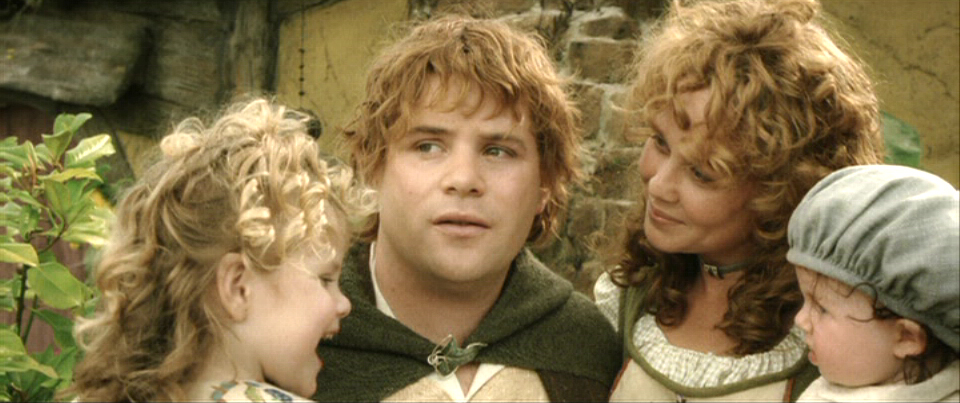
 Sam and Rosie apparently remain common folk, but some of their children marry into the Hobbit aristocracy

Over at the Notion Club Papers blog. 

Sunday, 9 June 2019

"Reading between the lines" of Life: Detecting the spiritual in personal life

Rudolf Steiner has some deeply suggestive things to say about this matter; in which he subtly asserts that the spiritual in life is to be found in exactly those aspects that are taken for granted - the backdrop of 'normal', everyday assumptions and experiences of things going well, not collapsing or exploding.

In a different way, he is making the same recognition that I came to in respect to the science of biology; when I realised that there 'must be' a vast positive, creative, purposive background in order that biology be possible.

This seems extremely difficult to describe with any precision; perhaps because it is the ocean in which we dwell; but it goes far beyond any specific instances (such as synchronicity) to notice that there are innumerable things that must 'go right' at every moment of every day; if The Whole Thing is not simply to collapse into chaos.

We should not really take for granted all the ways in which we don't die, and continue to perform innumerable functions and fulfil innumerable tasks (like walking down the street from one end to the other!).

As I say, it is to big and all encompassing really to 'explain' in the same way that we can explain smaller and more specific instances. But here are some excerpts from a lecture by Steiner (GA 181 - Berlin,5th March, 1918 - excerpted as Lecture 9 here) which may be helpful.

...A man was accustomed to take a certain walk daily. One day, when he reached a certain spot, he had a feeling to go to the side and stand still, and the thought came to him whether it was right to waste time over this walk. At that moment a boulder which had split from the rock fell on the road and would certainly have struck him if he had not turned aside from the road on account of his thought.

This is one of the crude experiences we may encounter in life, but those of a more subtle kind daily press into our ordinary life, though as a rule we do not observe them; we only reckon with what actually does happen, not with what might have happened had it not been averted. We reckon with what happens when we are kept at home a quarter of an hour longer than we intended. Often and often, if we did but reflect, we should find that something worthy of remark happened, which would have been quite different if we had not been detained.

Try to observe systematically in your own life what might have happened had you not been delayed a few minutes by somebody coming in, though, perhaps, at the time, you were very angry at being detained. Things are constantly pressed into one's life which might have been very different according to their original intention. We seek a ‘causal connection,’ between events in life. We do not reflect upon life with that subtle refinement which would he in the consideration of the breaking of a probable chain of events, so that, I might say, an atmosphere of possibilities continually surrounds us.

If we give our attention to this, and have been delayed in doing something which we have been accustomed to do at mid-day, we shall have a feeling that what we do at that time is often — it may not always be so — not under the influence of foregoing occurrences only, but also under the influence of the countless things which have not happened, from which we have been held back. By thinking of what is possible in life — not only in the outer reality of sense — we are driven to the surmise that we are so placed in life that to look for the connection of what follows with what has gone before is a very one-sided way of looking at life. 

If we truly ask ourselves such questions, we rouse something which in our mind would otherwise lie dormant. We come, as it were, to ‘read between the lines’ of life; we come to know it in its many-sidedness. We come to see ourselves, so to speak, in our environment, and we see how it forms us and brings us forward little by little. This we usually observe far too little. At most, we only consider the inner driving forces that lead us from stage to stage. Let us take some simple ordinary instance from which we may gather how we only bring the outer into connection with our inner being, in a very fragmentary way.

Let us turn our attention to the way we usually realise our waking in the morning. At most, we acquire a very meagre idea of how we make ourselves get up; perhaps, even the concept of this is very nebulous. Let us, however, reflect for a while upon the thought which at times drives us out of bed; let us try to make this individual, quite clear and concrete. Thus: yesterday I got up because I heard the coffee being made ready in the next room; this aroused an impulse to get up; to-day something else occurred. That is, let us be quite clear, what was the outer impelling force. Man usually forgets to seek himself in the outer world, hence he finds himself so little there. Anyone who gives even a little attention to such a thought as this will easily develop that mood of which man has a holy — nay, an unholy — terror, — the realisation that there is an undercurrent of thought which does not enter the ordinary life.

A man enters a room, for instance or goes to some place, but he seldom asks himself how the place changes when he enters it. Other people have an idea of this at times, but even this notion of it from outside is not very widespread to-day. I do not know how many people have any perception of the fact that when a company is in a room, often one man is twice as strongly there as another; the one is strongly present, the other is weak. That depends on the imponderabilities. 

We may easily have the following experience: A man is at a meeting, he comes softly in, and glides out again; and one has the feeling that an angel has flitted in and out. Another's presence is so powerful that he is not only present with his two physical feet but, as it were, with all sorts of invisible feet. Others do not, as a rule, notice it, although it is quite perceptible; and the man himself does not notice it at all.

A man does not, as a rule, hear that ‘undertone’ which arises from the change called forth by his presence; he keeps to himself, he does not enquire of his surroundings what change his presence produces. He can, however, acquire an inkling, a perception of the echo of his presence in his surroundings. Just think how our outer lives would gain in intimacy if a man not only peopled the place with his presence but had the feeling of what was brought about by his being there, making his influence felt by the change he brings...

Saturday, 8 June 2019

Addiction is evil

There is a lot of addiction around - and I used the expression myself in the title of a book about the Mass Media.

Addiction could be defined as a psychological response to captivity, by which the captive ends-up desiring and serving that which holds him captive.

(Somewhat, although not exactly - and from a different cause, like Stockholm Syndrome among kidnap victims.)


Addiction is an actual evil, because it is a choice. 

An addict is not just dishonest about his basic situation; but because dishonest he actively endorses and advocates his dependence as a good. An addict is morally-inverted and a systematic liar.

As when a heroin junkie extols the benefits of the drug (there have been several example in literature), and organises his life around the drug, and his primary aim becomes enhancing the experience of fixes - this justifying dishonesty, theft, violence, prostitution, even murder. 

A real addict does not want to be free of his dependence. And it is this quality which I seem to see all around me in the modern West - it is indeed characteristic of the modern West.


The typical modern is truly addicted to the Mass Media and Social Media - his life is organised by and around these.  He does not want to be free of this dependence, but will justify and advocate his state. He will expend tremendous time, money and other resources to enhancing these experiences.

And media addiction exhibits the classic signs both of craving and escalating dosage.When temporarily prevented from using media, there is mounting agitation - and the user takes a fix as soon as possible - immediately after the restriction or prohibition has been lifted.


More broadly, modern Man has become addicted to mainstream modernity itself. Many examples could be picked - addiction to politics, bureaucracy, fashion, and of course - sex. Modernity is literally and extremely addicted to sex.

Not, mostly, to doing sex - but thinking about it. Sexual reference and stimulus, sexual identity and preference, sexual advertisement and craving is everywhere, almost all the time, and escalating - but instead of acknowledging their dependence, and wishing to be free from it; moderns embrace their state of dependence.


There is no such thing as neutrality on any significant issue in Life; and when something is not regarded as bad it will be regarded as good.

When dependence is not repented, it will be celebrated: it will become addiction, and thus a sin.


Materialist Nationalism - is Bad: Christian Nationism (i.e. Nation-ism) - is Good

A 1930s-ish Railway Poster of the Yorkshire Dales - illustrating a selection of British Light Music 
- both poster and this type of music have significant (residual) elements of Christian Nation-ism

The decisive problem of actually-existing political Nationalism - even in an ideal form - as a philosophy-of-life is that it entails a morality based upon a de facto assertion of the superiority-to-alternatives of a way-of-life; including that the likes of Theresa May as Prime Minister, Justin Welby as Archbishop of Canterbury, the UK military in the Middle East and Afghanistan, and major social institutions such as the BBC, the NHS and the legal system... need to be endorsed as being representative major facets of the current nation. 

This means that even when (as is the case) materialist Nationalism is a lesser evil than the EU/ Globalism, and when it is the best-available-alternative - it is Not Good Enough. This, simply because it is a type of the modern pathology of spiritual and Christian-denying materialism/ positivism/ reductionism.

(Materialist Nationalism is, in fact, merely a slightly moderated version of the exact anti-Christian, spirit-denying agenda of the evil of demonic Globalism.)

Christian Nationism (i.e.Nation-ism) could be a name for something altogether superior and Good.

Let's say that Christian Nationism expresses the reality of a mystical England of which each Englishman is mystically a member.

This means that the materialist manifestations of nation (such as Theresa May, the BBC and the NHS) can be recognised for what they are - anti-nationists, strategically opposed to and destructive of the spirit of Christian Nationism.

I would add that ultimately the Christian aspect of Christian Nationism needs to be a Romantic Christianity. Why? Because the materialist, institutional aspects of Christianity are very-fully corrupted and anti-national.

Therefore the Christianity of Nationism must be Romantic - that is to say based in, derived from, a personal, spiritual, intuitive knowledge of the reality and Christian destiny of the nation of England; this is something that each must feel and know for himself, not least because there is no solid, clear, unambiguous, external source from-which such values can be derived.

Friday, 7 June 2019

How did you come across Narnia, The Hobbit or Lord of the Rings?

Readers are invited to contribute their personal stories at the Notion Club Papers comments - preceded by a linked example from William Wildblood, to get you in the mood...


Why do modern people actively-want a totalitarian system? (The Ahrimanic evasion)

As the totalitarian society increases in power and scope on a weekly basis, we need to ask whether an underlying reason for totalitarianism is actually that this is precisely what modern people actively want for themselves, as well as others.

If we judge people by what they say, what they do, how they vote, whom they criticize and persecute - it becomes clear that modern people desire a totalitarian system of total surveillance and micro-regulation*. A wholly un-free society in which anti-social behaviour becomes un-thinkable.

And the reason that so many modern people want this, is that modern people want, more than anything else, to evade responsibility.

This is, I believe, an existential life-decision, that goes very deep. By their revealed preferences, we may infer that modern people want to regard themselves as helpless victims, want to be protected, want to be favoured systematically. They want Not to be blamed for anything; they want it never to be 'my fault'. They want always to be able to say 'I couldn't help it'.

And they want it to be the case that any person who does try to assert responsibility or blame, any person who believes in human agency and freedom - be punished, eliminated, silenced, reprogrammed. 

In a world where evasion of responsibility is primary, a totalitarian system promises the perfect excuse of being thought-controlled.

This desire to be able to plead helplessness goes all the way to the top, where individual responsibility is replaced by committees and votes; so that nothing can ever be pinned on anyone. It includes the vast, global, bureaucracy-of-everything - so that every nation, corporation, group and individual can always claim that their decisions and behaviours were compelled, that they were merely following orders.

In sum, modern man is a willing servant of the demonic spirit of Ahriman - this kind of cold, anti-personal, reductionist, pseudo-scientific, systematised evil is dominant. And, ultimately, it is dominant because of the decisions and desires of the millions upon millions of mainstream modern people who collaborate and make careers from The System.

Mainstream typical modern Man (say, the ordinary - female - middle managers in an institution) viscerally reject the reality of their own existential freedom, deny their responsibility for their own beliefs, claim helplessness against the evil-intending propaganda they so eagerly embrace and so diligently implement and defend.

These want a totalitarian system and assert themselves to be powerless innocents. But they cannot in fact evade responsibility for their positive choice of an evil system that claims to eliminate responsibility.

Because thought cannot really be controlled - to 'be' thought-contolled is therefore a decision; and all claims of oneself being thought-controlled and therefore not-responsible are a dishonest excuse. Anyone capable of making that excuse is lying. Humans just are free in their thinking.

Instead, these people actually-are actively-evil - they are in a state of willing evil upon themselves and upon everybody else. They will totalitarianism, and totalitarianism is intrinsically evil.

And this has been their choice, it is what they want.


*It might be asked how I know what most modern people want? My answer would be as above - I am simply assuming that what people want is what they say they want - as confirmed by how they behave - with a high (but not complete) level of consistency, and over several decades. 

Anyone who disagrees and says that modern people really want something different - e.g. want to be free and responsible and others to be likewise, want to live in a world that encourages and sustains human agency... well, such claims go beyond objective appearances, and are asserting deep knowledge of the hearts of Men below the surface and despite contrary actions.

I am simply suggesting that as we descend into evil totalitarianism, people are - broadly speaking - getting exactly what they want; and are therefore personally responsible for what they (and we) get. To put it differently - our problems go very deep indeed, and they are far more wide-spread; much much deeper and more pervasive than most people realise. 

How to build an evil System

The System has for several decades been much less efficient than it used to be, and is becoming very obviously less effective. And They are clearly Not Even Trying to maintain (let alone improve) the functionality of modern society - or else They would not always be pushing for the 'inclusion' of ever less-competent and less-motivated personnel.

But equally, They do not want The System to collapse. Instead, They want to transform it into an evil System: a System for making people evil. 


So, we can observe that while They could, if they wished, cause a global collapse any time They wanted (the world is so interdependent, the System is so brittle, their power is sufficient) - this does not happen.

What They are doing is to corrupt The System as much as possible, without making it collapse.

In a paradoxical way - the ideal is a highly efficient and effective System - that is dedicated to evil; but a functional system requires competence, long-termism, obedience and other virtues. This creates a difficult balancing act, since the people in The System are ever less cooperative in maintaining it. As the corruptions of evil increase, the declining quality of the participants, and the deliberate corruptions of the organisation, will reduce and eventually destroy efficiency and effectiveness. 

On current trends, and with people as they are; our the future is either a totalitarian System dedicated to evil; or else The System will collapse, global chaos will ensue, and billions of people will die (probably including ourselves and our loved ones).

If we choose to maintain The System for fear of the alternative, we will probably (because this was our choice) ourselves become servants of evil - part of which will probably be voluntarily to perform actions that will further corrupt us (that is usually the way it seems to work). There is no way to opt-into a System of evil, but to opt out of becoming oneself more evil - the first choice is just the first of many such choices.

It therefore seems likely that our fear of the 'alternative 'of chaos, violence, starvation, disease and death; will be used to make us each, person by person, embrace purposive evil. Unless we die first, that is quite likely to be the real, underlying choice for most people, soon.

Indeed, it already is.

Thursday, 6 June 2019

People have already chosen Hell, en masse: Some tough-minded implications of Romantic Christianity

It may seem (to a traditionalist Christian) that Romantic Christianity is a soft-centred tissue of self-gratifying wishful thinking - an excuse to do whatever we happen to want to do, and pretend it is Christian.

But this is only the case if Romaticism is temporarily adopted, and is not followed-through. If Romanticism is adopted as a genuine principle, it has, on the one hand, the potential to be self-correcting. And on the other hand it has some tough and perhaps startling implications for the question of damnation.

The Romantic idea includes such aspects that Imagination may be a kind of knowledge, that intuition is the bottom-line, and that therefore each person must-and will make a personal and subjective evaluation and decision on all major issues.

But this subjective decision is also objective: that is, it relates to reality.

The implication is that the modern person has, in actual practice, in real life, and inevitably, made a subjective decision about major issues that is having and will have objective consequences.

Given what modern people assert about moral issues, and the nature of reality - for example modern mainstream sexual ethics, and the modern idea that this world is meaningless and purposeless, or the idea that morality is reducible to feelings - we need to take seriously that such assertions are genuine expressions of what many/ most modern people Really Think.

And if this is the case, then it seems probable that most people have already damned themselves, and have chosen not only to reject Heaven but actively to embrace Hell.

It has happened. Of course, this can be repented, then changed, at any moment - But that is exactly the current state of things.

Thus - Romantic Christianity is tough in a very individual and personal way; because we can no longer plead that we didn't know the truth, that we were misled by the lies of the mass media and bureaucracy - we cannot argue that we 'couldn't help it' and are not responsible for our personal judgements.

But We Are Responsible - here-and-now people have made up their minds and they are absolutely responsible for their decisions about fundamental matters.

Now there are No Excuses.

Christians dealing with questions

My experience of being a Christian is that questions arise and won't be squashed - or, if they are squashed, they fester.

I don't think this was a problem so much in the past, because the typical Christian lived in an environment - a social environment - which contained large elements of practice, such as ritual; and this could become the focus of the Christian life - such that unresolved questions were of rather trivial significance.

(In the past, individual consciousness was immersed-in group consciousness in a way that is impossible for most modern people. We have changed (evolutionary-development of consciousness), and consequently the world has changed; because our thinking is a necessary part of the world (The world is Our world) - there would be no knowledge of the world if thinking was subtracted from it; i.e. there is no objective world knowable in the absence of thinking.)

In other words, Christianity of the past was much more of a practice than a faith; and the practice was strongly - sometimes monolithically - prevalent and enforced in the immediate social environment; which we were each much more dominated-by. This is no longer the case, except maybe there is a lag among groups that are self-exiled from mainstream (such as the Amish), and probably less-and-less so even there.


At any rate, when I became a Christian my strong intention was (following the advice of CS Lewis) Not to get concerned about questions concerning theological minutiae and differences in church practice. But this was not possible. I was compelled, almost immediately, to make choices - within the Church of England I encountered the big differences in practice and belief of liberal mainstream and conservative traditionalism - e.g. did I attend or avoid Holy Communion administered by Priestesses? Protestant Evangelicals and Anglo Catholics - did I pray for the dead, make a sign of the cross, attend Eucharist as much as possible or a few times a year? One or the other, not both. Did I read the Authorised Version of the Bible, and if not then which of the hundreds of alternatives did I regard as correct?

When I looked beyond the Church of England I found similar divisions and compelled choices. There was no refuge without choosing one side, and rejecting the other - and then the question of what grounds am I making this decision.


So much of being a modern-day Christian sooner-or-later reduces to this matter of how to answer questions. And the dawning realisation that there is now way to avoid it - those that think they are avoiding it are merely self-deceiving, by hiding their own assumptions.

To say that one is indifferent is, of course, itself a choice; it is to say that such and such a matter is of trivial significance - which is to take a theological and church-order position. 

The situation is that honesty compels us to acknowledge that - in the end - everybody makes at least one decision that is an assumption, a personal decision made on grounds that cannot be justified except by further personal assumptions.


The Big Question, then, is whether this insight erodes faith, or becomes the acknowledged basis of faith; and that depends on how we regard the nature or reality.

Do we really-believe that reality is such that an individual really can know a thing directly and without evidence -- or do we instead believe that the fact of everything reducing to unsupported assumption means that nothing is knowable, and life is just a sequence of flexible, expedient, arbitrary assumptions.   

At a deep level, here is the bright-line-sharp distinction between being a Christian and being a secular mainstream leftist.

Wednesday, 5 June 2019

What might an attentive new reader gather from the opening of the Prologue (Concerning Hobbits) of Lord of the Rings?

...Is discussed at the Notion Club Papers blog.

Why did God make Heaven?

God's Big Project is Making Heaven (which is mostly Populating Heaven).

But why did he do this?


Well, what is the Christian Heaven? It is a family of God's children.

Why would God want a family? Well, why does anybody want a family - because a good family is an environment of love. So first of all, God wants to live in an environment of love.

God does not need this environment in order to survive, but wants this in order to be happier. From God's point of view Heaven is a place for joy, not a place for survival. I infer from this, that for us too, Heaven is meant for our joy - and not, therefore, as our only hope of survival.

(To be clearer - I regard it as an error to conflate the happiness of Heaven - for those who want it; with the idea that Heaven is our only possibility of eternal life. 'Mere' eternal life can be had otherwise than Heaven.)


I assume that when Jesus talked of his gift to us of Life Everlasting, in the Fourth Gospel, he meant to imply much more than mere personal survival after death - because the bulk of  the Fourth Gospel is taken up by poetic/ symbolic descriptions of the qualitatively-enhanced nature of this post-mortal and Heavenly life.

So, firstly, Heaven is made as a better environment for God; better than the alternative of (more or less) relative solitude. And then it is made as a better eternal, post-mortal environment for Men.

(But not for all Men; only for those Men who want it, who freely and consciously choose it.)


Having made a place, and decided it is to be like a family; what then do people actually Do in Heaven? What could possibly be a sufficient occupation for eternity?

Only, I suggest, a job that is both open-ended and intrinsically gratifying - a job that never gets finished, but which is satisfying all the way and at every stage.

The only such work is creation, in its many and various modes. And for creation to be lastingly satisfying, the 'products', the outcome-of-creativity must be eternal.


So if you and I are to be creating forever, this means we must participate in the divine work of creation - because only that is eternal. We must become co-creators with God: we must become gods alongside God. 

To clarify, God is the primary creator, we God's children. The plan is that some, at least, of us will rise to become 'secondary creators' within the primary creation; but this secondary creation becomes itself a part of all creation. God's creation is ongoing and increasing all the time; and our personal creative contributions to this are woven-into the eternal fabric. 

This means that, as well as being a family, Heaven could also be called a 'collegial' situation in which some (at least) of God's children have themselves fully grown-up to become immortal (resurrected) gods. Heaven requires gods as potential colleagues, as full collaborators, in the everlasting, ongoing work of creation.


In sum, the making of Heaven is the making of a situation in which everlasting life can be a permanently fulfilling activity; a place, therefore, of love and creation.


Note: These musings are derived from the early parts of William Arkle's booklet Equations of Being.

Tuesday, 4 June 2019

Mother-Father-Parents - developmental-evolution of the concept of God

(It seems that) In the developmental history of Men, there were three broad phases of how the ultimate deity was regarded: Orinially God as Mother; then - for most of recorded history - as Father; and - now and in the in future - Parents.

Hunter Gatherers seem to regard 'God' as (or, since it is not fully conscious or articulated, as if) a nurturing Mother; who provides all that is needed; and gives birth to all Beings. This goes with a passive and responsive attitude to the world - God as everywhere and Men as children.

Agricultural societies (and traditional sedentary societies - from at least Ancient Egypt until the Industrial Revolution in the West) generally have a masculine concept of God, or the supreme god; and this especially applies to monotheisms. This was the case for the early centuries of Christianity, and until the past several generations.This goes with a Kingly image of God, with religion as rituals and laws; and Men as subjects.

From the period of modernity (and especially since about 1800) I believe that the understanding of God is destined (supposed) to be as Heavenly Parents - Mother and Father in a celestial marriage, as a distinct but inseparable dyad - a polarity. This is - I think - the proper future and correct understanding of God: as Heavenly Parents.


This is explicit and officially sanctioned in the Restored Gospel of Mormonism, although in practice - so far - Mormonism has been as much (or more) Patriarchal as mainstream Christianity; and there is very little reference to Heavenly Mother or to the dyadic nature of God.

However, my interpretation of this, is that it is a temporary and merely-expedient distortion caused by the rise to dominance of materialist-leftist and socio-political feminism; which (as a strategy) tries to subvert the assumed male nature of real-God and replace it with an insincere female image of not-really-God (i.e. 'liberal Christianity' in its various forms).

Another distortion is the (only semi-serious, not truly lived-by) idea of restoring tribal ideas of God as Earth Mother - a pantheistic idea of non-purposive Goddess divinity; which owes much to an eclectic partial-assimilation of Hinduism and Buddhism. As well as being undesirable (an attempt to become spiritually children again); this is impossible due to the large changes in human and societal evolution: it just will not happen.  


Another distortion is the abstraction of God. Instead of regarding God as an incarnate person (of whom the resurrected Jesus was the filial image); the process began soon after the ascension of regarding the sex and personhood of God as childish anthropomorphism.

So we get the idea that God is not really either male or female, but both-or-neither. This leads to a sexless abstraction of God's person. And leads to the idea that the sex of mortal Men is just a temporary aspect of mortal life (just as mainstream Christians usually regard marriage as merely an expedient of mortal life, dissolved at death and without any equivalent in Heaven) - and that after death we will move-on to becoming de facto sexless.

(I regard this tendency to abstraction, sexlessness and not-incarnation of God, as the deep reason why mainstream Christians have found themselves unable coherently to defend real marriage against the mind-warping yet officially-mandatory literal-insanity that is SSM and the trans-agenda - and whatever is planned to come next...)


Anyway, to pull the argument together; my contention is that the truth and future of Christianity is to regard God as a dyad of Heavenly Parents - and to regard the sexes - man and woman - as ultimate, metaphysical realities, which underpin all of creation from eternity.

Paradise versus Heaven (what's the difference?)

Lots of religions 'offer' Paradise as their goal or reward; only Christianity offers Heaven.

So Christianity is a 'better deal' IF (of course) it is regarded as true, and if Heaven is what you want (in which case, God offers Paradise as an alternative).

But what is the difference between Paradise and Heaven? 

Paradise is the perfect place for passive enjoyment. It is like a permanent (and perfect) holiday; a place where all the things that happen to you are enjoyable. A key is that phrase 'happen to you' - in the sense that Paradise is about things happening-to you.

Whereas Heaven is about active participation in the work of God's creation. It is therefore about becoming a god - in Christianity this happens by following Jesus through death and 'out the other side' to become an immortal resurrected Man.

Note: Some Christians regard Heaven as if it were merely Paradise - this may be due to a misunderstanding, or because Paradise is really what they would prefer. After all, not everybody wants to grow-up to become a god - and I see no reason why God would not make provision for such preferences. So there are also permanent children in Heaven, for whom Heaven is Paradise - and these may perhaps outnumber the grown-up gods.

Top-Down versus Bottom-Up Christianity (or the CS Lewis versus Bruce Charlton strategies for conversion)

I associate CS Lewis with the Top-Down strategy for becoming a Christian - the suggestion for What To Do when you want to become become a Christian but aren't yet a Christian.

Lewis's basic idea is that you start out by 'going through the motions' or (less charitably) 'pretending' to be a Christian; and the rest will follow.

So, for instance, you might start praying, reading scripture regularly, or attending church (he suggests the nearest church of your birth denomination - which made sense up to c.1955 but nowadays would be pretty hazardous in most cases). The idea is that by developing good habits on the surface, your deep convictions will be trained to follow.

If this works, then by all means do it! But I suspect that modernity has inoculated many people against any and all such surface approaches, because it has ensured that all information will be systematically misinterpreted. Plus leftist-materialism has so permeated all institutions that church services and scriptures (in new translations and commentaries) alike have been corrupted to work (overall) against Christianity - e.g. by presenting the religion as primarily 'about' social justice or the environment.

My alternative idea (expounded multiple times on this blog) is for individuals to discover and examine their own most fundamental assumptions about reality - their metaphysics.

These might include assumptions that there is no soul, that the spiritual realm is imaginary, that all talk of life after death is wishful thinking, that reality is a mixture of blind determinism and accident etc. Such assumptions (which are very common, but unfounded) will usually block conversion, so they probably need to be addressed.

By 'examine' these, I mean they should be made clear and brought before the intuition, the imagination - to see whether we really-and-truly and whole-heartedly endorse them as necessarily true... and if not, what instead we do endorse.

Such a process will, I think, lead most people to Christianity if pursued honestly and diligently - and will do so in a Bottom Up fashion, by building Christianity upon the foundations of what we feel-and-know to be true metaphysics.

Is Clevedon the dullest, or most romantic, town in England?

A flattering image...

A blogger describing his childhood memories, recalls Clevedon, Somerset, as a place he regarded as 'the most boring seaside town in all England'; and I would have to agree.

For me, as a school-kid, living just a few miles away - it was the dullest of all nearby destinations. It had a kind of grimy, life-sapping quality - despite being beside the sea (the beaches were terrible, the rocks dull), and having a pier (just depressing). The shops seemed lifeless - although I recall a secondhand bookseller where I once purchased a book by Ralph Whitlock on the history of English agriculture.

Therefore, you can imagine how incongruous it seems to discover that Clevedon has a set of Romantic connections that matches almost anywhere of its size, excepting perhaps Keswick. These began with that Architect of English Romanticism Samuel Taylor Coleridge, who spent considerable time in his early marriage living in Clevedon - and Clevedon was where his beloved son Hartley was born.

Coleridge indeed moved house from Clevedon to Keswick - so perhaps he was the factor that made a place a 'magnet' for romantics - at any rate, later on the greatest Victorian poet and Arthurian, Alfred Lord Tennyson, used to visit; probably because his great friend (subject of In Memoriam) Arthur Hallam is buried there.

Then JRR Tolkien chose to spend his honeymoon with Edith in Clevedon, of all places! And just a few years later CS Lewis spent some holiday time there with Mrs Moore and the houseold (who had a family connection with the place) - as documented in his published diaries.

Altogether a mystery! Had there been a magic about Clevedon, that had been destroyed or dissipated by the time I knew it? Was I merely insensitive to its subtle vibes? Or is it just a series of coincidences that the place was a magnet for Romantics?

But then, there are No Coincidences...


Note: recent readers of this blog may not know that there exists an incomplete, lighthearted, childhood autobiography (to which I sometimes add) called Lucky Philosopher. 

Monday, 3 June 2019

How to follow your personal destiny - the polarity of outer and inner - our dual-guidance-system

Since we are each, from eternity, unique souls - then there is an unique destiny, a personal destiny, for every individual.

But discovering (and then, of course, following) one's unique destiny is a difficult matter, and many people don't know how to start - or how an unique destiny differs from randomness or arbitrariness.


To make an unique destiny possible requires both internal and external guidance, and it is from the dynamic polarity of their relationship that we can navigate our destined (but not pre-destined) path through life.

Our external guidance is known as the Holy Ghost, and is accessible to all Christians; since the Holy Ghost (according to the Fourth Gospel) was provided by Jesus after his ascension.

Yet if the Holy Ghost had been the only kind of guidance, then our destiny would be 'given' to us; and our task would merely be to consult the Holy Ghost, and then passively to 'follow' its instructions, as best we could.This would be a life a spiritually children (and was indeed our own life as children, and probably the life of all Men in earlier periods of Man's history.)

Such a life of obedient passivity is a one-sided caricature, because it never was, nor could be, wholly the case; but this life of child-like obedience to external dictates was surely once regarded as an ideal; wheras now a passively obedient life is Not the task of modern Man.

(Such a life is simply Not An Option. Modern Man is an adolescent in spiritual terms, negatively rejecting of passive obedience; and as adolescents we cannot return to childhood. Our task is freely to choose to develop, to grow-up, into spiritual adults... or else we will remain, as we are: perpetually adolescent.) 

Due to the evolutionary-development of human consciousness since the time of Jesus, our task is now to take an active, conscious path through life - freely chosen. This does Not At All mean that the Holy Ghost has been superseded, but instead that we now have a 'dual guidance system' formed from the interaction of outer and inner.

The inner guidance comes from our real self; the eternal self that is divine; albeit an undeveloped divinity; which is how it can be the creative source of uncaused thinking, primary thinking. A life guided solely by the inner guidance system would be merely egotistic, prideful, rebellious, hedonistic, impulsive - adolescent. 

But outer and inner guidance combine to form a classic polarity; in the sense that the outer guidance is centripetal, constraining, receptive, 'feminine'; while the inner guidance is centrifugal, generative, exploratory, 'masculine'.

This is a polarity because although they can legitimately be distinguished, neither guidance can exist in actual detachment from the other - and this union arises because at a deep level outer and inner are continually-being-produced-consequences of a single, living, conscious, dynamic process.

So our task in this mortal life is therefore actively to work from our own inner motivation, which is in continual interaction with the Holy Ghost. The result is experienced as 'intuition', which is our directly known direction and purpose through life.   

Romantic Metaphysics and Christianity

In Romantic Christianity and in Life - the most important thing to be romantic about is metaphysics. What we need, above all, is a Romantic Metaphysics.

What I mean by this is that our fundamental beliefs concerning the nature of Reality, ought to be such that we feel Romantic about them; they should appeal to our imagination, we should love our metaphysics, know it from experience to be beautiful and wonderful. And this is, of course, something that we can only discover for ourselves, from living (intensely) with these beliefs, from using these beliefs in practice in a way that is whole-hearted.

From my experience, since becoming a Christian, finding Romantic Metaphysics is a path which may not lead to the destination immediately. For me it was (broadly speaking) a case of 'third time lucky'.

Firstly I embraced the Aristotelian-Thomistic metaphysics of the traditional Roman Catholic church. I found the process of understanding this to be very exciting and romantic; but once I had understood it (hylomorphism, etc.) then I began to find it dry and abstract - and I could not be whole-hearted about the fundamental assumptions that underlay the system of thinking. The fact is that I regarded these assumptions as arbitrary, and did not love them.

Next I became a Platonist - in association with Eastern Orthodox Christianity. This, I found much more Romantic (I already knew quite a bit about Platonism, and had felt drawn to it). The whole idea of the liturgy, the idea of the Orthodox society (Byzantium, Holy Russia) had much to appeal. So this swept me along for several months.

But as I took on board the fundamental assumptions, as I came to understand - I began to feel the infinite gulf between the ideal world of forms which was God's Heaven - and this actual mortal life. The Orthodox ideal of ascetic monasticism, was - even if perfectly realised - merely a pale copy of what was wanted. Indeed, there was no real necessity to mortal life; it would surely have been better to have been born into Heaven - or, as second best, to die and get there ASAP.

Platonism is anti this-mortal-life - its Romanticism is not actual, but displaced to another ideal world, time, place, situation...

Furthermore, the actuality of being Eastern Orthodox in the context of a modern atheistic materialistic Leftist society; with Orthodox churches that were designed for expatriates from other nations, meant that in practice is was just a different kind of church to attend. The daily private practice was not Romantic - but felt bogus and pretentious, and did not yield imaginative fruit. Modern Orthodox life was a very pale imitation of the Byzantine ideal; but even that life had seemed a tragic and unsatisfactory imitation of the abstract timeless perfection of the Heavenly reality.

Romanticism led me into Orthodoxy, and then it led me out again.

My third, and with modifications (eg. from Barfield and Arkle) so-far-final Romantic embrace was Mormon metaphysics.

The difference here was that my Romantic feeling of attraction grew as I discovered more, and as I lived with my earlier imaginations. I took a while before I distinguished between the Mormon metaphysics - for which I felt a spontaneous Romantic love; and the actualities of Mormon religious life in modern Britain - which overall did not attract me.

(There is, I discovered, no actually existing church or denomination or formal religious practice that attracts me Romantically and imaginatively. Therefore, by my Romantic principles, there is none to which I can (or should) commit myself. But the metaphysics of Mormon Christianity has not just proved durable in my life, but has led to a renewing stream of further Romantic intuitions and insights.)

So eventually - the process took about five years - I found a solid ground of Romantic metaphysics to underpin and clarify my Christianity. To recap, the process involved a thoroughgoing and persistent Romanticism; making the Romantic choice then persisting with Romantic evaluations in a serious and exploratory way; until I found solid ground upon-which imagination could stand, and from-which imagination could draw further nourishment on an (apparently) permanent basis.

Sunday, 2 June 2019

All Souls day, Art and our connection with the (so-called) dead

Edited from The Forming of Destiny by Rudolf Steiner GA 157a - Lecture Berlin, 7th December, 1915

Man is confronted with the outer occurrences of nature, the external beings, and events of nature. These run their course and expire. But beyond all this man seeks something which really has nothing to do with the immediate necessities of the world. 

If nature and history were merely concerned with the satisfaction of human needs, life would become barren and desolate. Man creates here in physical existence something above and beyond the course of nature and necessity. We can think of the whole realm of Art as something that man creates here which is higher reality than the ordinary reality pertaining to nature and history. 

Just think what the world would miss if there were no Art, if Art did not add that which she can produce from her own sources to that which is self-existing. Art creates something which, one may say, need not of necessity exist. If she were not there, all the necessities of nature might still go on. One may suppose that even if no single copy of nature had been made and no artistic representation, life would still pursue its course, from the beginning to the end of the earth. 

We have in Art something extending beyond life. Think of all that Art has created in the world, and also of the progress of man through the world; there you have in a sense two parallel progressive processes: the necessities of nature and history, and the stream of Art which is inserted in them.

Just as Art, in a sense, brings as by enchantment a spiritual world into the world of physical reality, so another world conjures up into the world of those who have gone through the gates of death: these memories which fill our souls here. 

As far as the dead are concerned the world here might run its course without any memories living in the souls here, memories born of love and all our human relationships. But then the world of the dead would be to them as a world without Art would be to us — a world in which we could find nothing transcending ordinary reality. 

Here in the physical world a man must bring forth artistic creation out of his own soul, must contribute something out of his own being; similarly, to those 'dead' who are now in the spiritual world. What we in this world gain from Art, must be brought to the dead from their our world. If we had no memories of the dead, the life of the dead would be like our life would be without any Art.

Why has a value always been laid by human communities on the celebration of All Souls Day, and days for the dead? Because in the depths of man's subconsciousness there lives what may be called a dim knowledge of what takes place in the world by keeping alive the memory of the dead. 

When the receptive soul of the seer celebrates All Souls Day, or a Sunday devoted to the dead, or some similar day when many people come together full of the memories of their dead, he sees the dead participate in the ceremony. For the dead, such events are the same as when the living truly hear a great symphony. 

Comment: I find several points here very telling.

First the comparison between Art for the living; and the living-memories of the dead, for the dead. In other words, this is not a matter of survival, but of meaningfulness - but the comparison shows how important meaningfulness can be (because a life utterly without Art of any kind would be, for most Men, a very poor quality existence indeed.)

So this is a matter of what we, the living, can and should be doing for the dead.

The second point is to note the importance of some kind of day of the dead for traditional, agrarian societies - so that at least once a year the dead will be remembered by ritual celebrations and observances.

(This annual and communial event can, itself, be regarded as already a considerable retreat from the kind of taken-for-granted inclusion of the the dead in ordinary everyday living by every single family and clan, which is reported for most tribal societies.)

We moderns have left behind this kind of practice, but have not replaced it - except in a partial and ad hoc fashion (such as the observance of anniversaries of the death of prematurely dead - children and young people). The usual secular modern preference is for a short and intense grief; then (as soon as possible) to 'move-on' form the death of a loved-one - in particular it is regarded as pathetic if someone continues too long, or pays too much everyday attention, to the dead.

And if the bereaved indicate by word or action that they consider the deceased to be - in any active fashion - alive and involved in this world... well that is generally regarded as a form of mental illness. So, apparently, human culture has swung around something like 180 degrees - from the beloved dead being a part of life, to a situation when this behaviour would be regarded as stupid or sick. 

My conclusion is that Steiner was onto something important here, a very significant aspect of life that all modern people, including Christians, ought to reconsider - since even Christians (especially Protestants) have developed attitudes hostile to the idea of any kind of real and important communication, any genuine link between the living and the dead.

An attitude of ignoring the dead (or regarding the matter of relations between the dead and alive as not-significant) is certainly unnatural to humans - and that fact should give us pause; since what is unnatural (and so by a wide consensus of historical societies) is likely to be objectively wrong in some way.

My conclusion is that we are probably meant to consider the beloved dead as a part of our lives, to remember them, and to in some way remain in contact with them. That 'in some way' should be the focus of our investigative efforts.


Why I am Not a universalist with respect to salvation

The basic reason is that I have an extremely different understanding of ultimate, metaphysical reality from that which underlies the belief in universal salvation.

Universalists tend to regard Heaven as the only place of happiness and therefore a place where everybody - sooner or later - wants to go, and God as gatekeeper to this place. A loving God would - on this model - want all of his children to be happy, and would not bar the door to the place of happiness to anybody who wanted to enter.
 
In other words, universalists are unable to conceive of anybody who would not want to be in Heaven, rather than the alternatives.

In this sense, universalists regard all humans as being fundamentally alike in their nature and aspirations.

I, by contrast, see humans as having fundamental differences in their nature, and differences in what they want, from the beginning. I regard some people as having always been evil, in the sense of being opposed to Good (and Good derives its meaning from God's creation - so that to be evil is to oppose creation, and favour its destruction - to want to prevent the possibility of Good).

I presume that some souls have always been - by their nature, and for many possible - opposed to the idea of joining God's creation. This is not necessarily evil - because Heaven is an optional opt-in; a positive option.

So throughout eternity, there have been souls that preferred (for many reasons) not to join the creative and loving endeavour that is Heaven. Only some of these are the fallen pre-mortal spirits that we call demons. Others might have chosen permanent solitude, others might have chosen destruction of the Self and permanent bliss. Such choices are not necessarily irrational. 

There is also a difference in the understanding of freedom. Universalists see that any choice other than Heaven is a failure of freedom; that Heaven is the only rational choice for every person - or, that every choice other-than Heaven must be based on ignorance which, and when (sooner or later) eventually ignorance is cured - then the decision to reject Heaven would certainly be revised. And then God would (being loving) accept them into Heaven.

In sum; I believe there are some people whose nature is such that they have rational grounds for rejecting Heaven, and there are also some people whose evil opposition to creation, whose desire to see other people suffer, to inflict pain etc. is a trait they have possessed from their origins.

My understanding is that God, as our loving Father, keeps open the possibility of redemption for these people as long as possible, But a vital part of freedom is the freedom to make permanent commitments - for Good and also for evil. Indeed, this freedom seems to me vital for the existence of Heaven.

Heaven is only possible because people can make a permanent commitment to live in love, and work in participation with God's creation, with the other inhabitants - for eternity.

And the 'flipside' of this is that it must also be possible to make permanent commitments in the other direction, in the directions that involve choices other-than Heaven (some of which are actively evil, others of which are more of a passive opt-out).

So, I am not a universalist - nor do I regard universalism as evidence of God's goodness. But I can understand why, for those who accept the 'standard Christian metaphysics' of who reality is set-up, they can be led into universalism - because God's love is indeed his one essential characteristic.

However, universalism is not - long term - and in a church setting, a sustainable answer. Because when universalism is inserted within a traditional Christian framework introduces a kind of fatal flaw that tends to destroy the institutional system.

But perhaps this is itself an inevitable and necessary phase? Because if churches rely on God being seen to exclude people from Heaven who want to be there, than perhaps such a gross distortion to the essence of Christianity is so great that it invalidates any particular instantiation of the religion that depends too heavily upon it?

Saturday, 1 June 2019

Beings and Selves in Time

Reality is made up of Beings. And these Beings exist 'in' Time.

In physics terminology, Beings are analogous to processes. If you try to think of a process outside of Time, it becomes frozen and not really a process anymore - and the same kind of thing happens with Beings.

If you try to think of a universe of Beings that are not 'inside time' then you will get something very unlike Beings - maybe a reality made of indestructible inert spheres, or something like that.  But beings are intrinsically active, doing - to some degree.

Because Beings are in-Time, then they must be 'doing' something - and what Beings are doing is having Relationships with other Beings.

So, this is the irreducible basis of Reality - Beings have-ing Relationships... Time cannot be subtracted from ultimate reality.


Because Beings are active (like processes) and eternal (because fundamental aspects of reality) - Beings are self-generating, self-creating.

If beings were like physics things, Beings would be perpetual motion machines, with infinite inner resources for self-creation.

But as Beings are the most fundamental units, we infer that self-creation is simply a 'property' of ultimate reality.


What about the Self? Well, Self is what a Being calls it own Being - so a Being and it's Self are the same 'thing' - but the Being is externally and abstractly regarded, whereas the Self is a Being's conceptualisation of itself.

I assume that this is an intrinsic property of Beings - that Beings know they are Selves, to some degree distinct from other Beings.

There is no 'inside' to the Self. It is a primary unit of reality, indivisible, unanalysable - and this (I think) means that the Self is 'immaterial' - it is not solid, not localised, does not have a surface, cannot be perceived or detected...

This sounds like lots of negatives, but this is simply to state that when it comes to the primary units of reality, there can be no further analysis. We can describe what a Being is and what it does (much like describing the character of a person in terms of his attributes, or inferred dominant motivations), but we cannot discuss its 'inner workings'. 


What is Consciousness? Consciousness is something outside-of and different-from the Self. The Consciousness observes - and one of the things Consciousness observes is the Self.

All Beings have some degree of Consciousness; although some entities (of what we call the mineral world, especially; but also the plant world) have a Consciousness that is relatively slow and weak, compared with men and some animals.

So all Beings are in relationships with other Beings, and all are somewhat Conscious of themselves and of this relationship with other Beings. All Beings therefore know themselves located within ongoing Time and reality.

What this means is that Self and and Consciousness are both attributes of Being. We can distinguish Self and Consciousness, but they are not divisible - you cannot have a Self without Consciousness or vice versa; S & C are characteristics of Being (which it may be helpful to distinguish), but S & C are not 'components' of Being.


This is a strange way of reasoning! ('Coleridge apparently called it Polar Logic; and you can read about it in Owen Barfield's What Coleridge Thought.)

But it essential to think in this way if we are to avoid the unresolvable paradoxes and problems that have plagued and paralysed Western Philosophy (and Christian Theology) since the Ancient Greeks invented it.

The key is to include Time in our fundamental metaphysical assumptions about ultimate reality - and this fits with (or naturally flows-from) the Christian scheme; since the incarnation, death and resurrection of Jesus happens in history, in time.

Christianity is linear, sequential and purposive.
Weeping Willow Rag - by Scott Jopin, played by Joshua Rifkin


One of my favourites of Joplin's in a truly wonderful performance that just keeps getting better throughout.

The synopations in the final measure between the descending bass (I have always supposed this downward movement was the 'weeping' aspect of the willow) and the the melody are delicious; and when Rifkin does this double-time in the bass during the repeat, it adds a further excitement.

Aside, Rifkin plays this on a Baldwin SD-10 grand piano - and it is one of the very best intruments I have ever heard; with a mellow and concentrated, rich and springy tone - especially strong in the bass.