Sunday, 11 December 2022

Deutekom as Queen of the Night - Zittre Nicht: simply the most thrilling aria ever recorded


I have listened often to Cristina Deutekom's recording of the Queen of the Night's first aria from the Magic Flute, conducted by George Solti, across a period of something like 48 years; and I have never heard anything to match it! 

For me; it stands-out the single greatest performance of any operatic aria by anyone.   

This singing is quite simply incredible. Of course, this is a first rate aria from my favourite opera; and the dramatic situation is superb. But, on top of this, Deutekom's vocal performance has an extraordinarily quality that I find literally hair-raising. 

Mostly, this is the sheer quality of the voice: its concentrated tone with its sharp-focused intonation, its almost inhuman fast-shimmering quality. It is both beautiful, and terrifying - as befits the character. 

Then there is the detail of the singing, with value given to even the smallest decorations - for example the up-going semiquavers at 3.16-17 is slurred by every other singer (you can see the little notes on the score, and sort-of sung, at 2:56 here) at - yet with Deutekom this little is so wonderfully dotted-in that it makes me cry!

The great thing about this aria is that there is an unfolding, lyrical, non-repeating section up to 3:42, when the Queen is trying to seduce Tamino to rescue her daughter by pretending to be a grieving and wronged mother. But then, the mask slips, and she launches into a demand for violent vengeance from the young knight; culminating in coloratura fireworks leading to a stratospheric high F quaver, marked staccato!

Another favourite bit is the triplet passage from 4:17, which Deutekom - uniquely among great singers, and for the first, but not last, time in this recording - uses her throat to separate the rapid notes - whereas other singers just don't separate or accentuate them, or do so by aspirates (in effect, each note is sounded like huh). 

Deutekom's distinctive technique enhances the unearthly quality of this performance (after all, the Queen of the Night is not really a human - but a kind of dark fey).  

It is interesting that this performance in Solti's Flute (BTW, for completeness - here is the Queen's other, and more famous, aria ) led to a cult of Deutekom; which is evident on YouTube comments, with extremely polarized opinions. 

It was the same when I was at university. I would often play this recording to friends. For some people it had a stunning, revelatory quality - never forgotten, and with a lifelong impact. 

Among some of my musical friends we would often refer to this performance and its aspects. Yet others - also musical - cordially disliked it... 

Such is the nature of greatness.   


Note added: I am glad that, before the internet, I did not realize that Deutekom was a fair-haired, homely-looking (and, apparently, sweet-natured) Dutch lady. She sounds - in this recording - like a darkly-beautiful, 6ft tall, slender, evil enchantress - of some weirdly-exotic origin. 

"Tolkien's" The Rings of Power encapsulated in seven glorious minutes


This is, hands-down, the best commentary I have yet seen regarding the major cultural inflexion point that was Amazon's Rings of Power TV series; rendering obsolete my own prior ramblings on the subject

I laughed out loud several times - so dense, deft and witty is their take on it. 


How culpable is ignorance (aka accepting mainstream misinformation) on Litmus Test issues?

It is normal for most people to have strong convictions concerning issues about which they have passively absorbed these convictions entirely from the mainstream media and officialdom. 

For instance, the most recent of the major, world-agenda-shaping Litmus Test issues of 2022 has been the Fire Nation versus Evil Empire proxy war. 

Most people in my corner of the world have aggressively/ sentimentally adopted a stance 100% in line with that propagated by the Western Establishment; and are both completely ignorant of the causes of this conflict, and completely wrong about the Fire Nation's motivation and conduct. 

How culpable are such people for having chosen to support the side of evil in this great conflict of our time? 


There are various views on this matter. 

One is that people are not to blame, because all their information and analysis (whether from TV, newspapers, official announcements, or PR from large corporations) is consistent and internally coherent (at least, on a day-by-day basis - which is all that the masses ever notice). 

Such sources all confidently state the same things, often in the same words and with identical images; and provide 'evidence' to support this conviction; while contrary information is not available (is indeed aggressively excluded). 

This would suggest that the support of the wrong side is simply mindless, non-responsible; and therefore innocent and not-culpable - in much the way that young children are innocent and cannot be blamed for their expressed opinions on matters they take secondhand.

This interpretation has it that the masses are closely analogous to young children in terms of innately trusting of authority. This is regarded as a fact-of-life, so that the masses are non-responsible for whatever authority tells them - and if the ignorant do preen themselves on their moral stances, and boast of their own Goodness; then this is merely the forgivable bravado of a youngster obediently mimicking his elders. 


But such a view takes-for-granted that it is natural and reasonable for people passively to accept whatever view is propagated vigorously and monolithically by The Establishment. 

That, in other words - here-and-now, in 2022 - when Western authorities are unified in pushing a point-of-view; then it is a reasonable and morally innocent default to accept this point-of-view; and adopt the recommended attitudes.

"After all," it is said, in effect; "we can hardly expect ordinary people to look behind the mass-media-official view, and each-for-himself discover that covert reality which so starkly contradicts the propagated fake-narrative."


Well, this matter of what we ought-to expect from people, before adopting an opinion - is itself a thing that divides opinion. 

It has become accepted that it is OK for someone to spend (say...) two hours a day marinating-himself in official/ mass media propaganda, plus another couple of hours reinforcing this on social media; yet never even for five minutes checking anything by looking at 'alternative' sources, or even by five minutes of rigorous and critical thinking and remembering.

Yet, by now it now seems clear that - whatever people ought to do in terms of checking - they will Not do it. And it is therefore just so much wasted breath, or ink or pixels, to assert that they should be doing it! 

Any complex or effort-entailing answer to the problem of passive mind-manipulation is therefore a non-starter. 


What, then, is the real crux of this matter? 

It is, simply: one's attitude to Litmus Test issues as such

When the world of officialdom, corporate propaganda and the mass/ social media are pushing some-thing; do we - as individuals - assume that this means what is being pushed is good and true? 

Or - do we - as individuals - assume the exact opposite: that the fact of such an onslaught of opinion and 'fact' means that what is being pushed is instead an evil lie? 


And this crux-decision, in turn, depends on our value-discernment first about whether or not the dominant Western Establishment institutions comprise a single and controlled System

Among those who recognize a controlled System; there is then the question of whether the System is net-Good, or is net-evil. 

This matter of the System, then, is the Big Issue of the West in 2022; upon which all matters of public policy can be seen to hinge. 


The two questions are whether there is indeed such a System, and if there is a System, whether it is aiming at Good?

The decision about whether or not there is a System is decided by a person's prior assumptions as to whether it is possible that there could be a System. 

If it is pre-decided that there cannot be a System, and anyone who supposes there could-be is a 'conspiracy theorist', then there cannot be a System: so it will not be recognized, regardless of 'evidence'. 

If, instead, it is regarded as a real possibility that there might be a System - then the interpretation that there is indeed a System will instantly be obvious; because a vast and growing mass of supporting evidence will be clear and unambiguous. 


Among those who do recognize a System, the evaluation of that System will largely depend upon whether a person is spiritual-Christian or instead a materialist-leftist.

(Because there are few, and ever fewer, people who do not inhabit one of these two categories.) 

For the large-majority who are materialist-leftists; the System is obviously Good, overall. 

For the small-minority who are spiritual-Christian; the System is obviously evil. 


I think this is where the original question leads us. I asked whether those who, for instance, support the side of evil in its war against the Fire Nation, are culpable or innocent. And my answer - from a spiritual-Christian perspective - is that they are culpable and therefore evil...

But they are evilly-culpable not in this specific decision, but in their having chosen to affiliate with the System - which is evil. 

Naturally, such a person will believe... whatever the System is telling them; and the more forceful and sustained is the System messaging - the more strongly the System will be believed. 


But, for someone like myself; if the System is saying any-thing in a forceful, sustained and coherent fashion, then that thing must be an evil lie  - or else the System would not be saying it. 


Saturday, 10 December 2022

The Eastside Torpedoes: the band I watched live more than any other


Back in the early 1980s, an infatuation with Dexy's Midnight Runners led on to becoming extremely keen on 1960s Soul/ R&B (Stax/ Atlantic/ Motown type); to the point of learning alto sax and joining a band for a couple of years.

(Until I cracked my upper incisors on a metal mouthpiece, and had to quit playing altogether... admittedly no great loss to music.)   

At this time I used to see a fair bit of live music around Newcastle upon Tyne, including by local bands - some of which much was very much to my taste. Arthur Two Stroke and the Chart Commandoes, and Ray Stubb's R'n'B All Stars were favourites; but the band I saw far more than any others was the Eastside Torpedoes - more than once even attending gigs twice in a week. 

Their repertoire was very much to my taste, with a superb four-piece brass section featuring Nigel Stanger on alto sax; who had played with The Animals, Georgie Fame and Alexis Korner; and who improvised some wonderful stuff.

The recording doesn't do the band full justice (btw the last of the three tracks is my favourite - it's superb) - but its all that remains except memories.  

I don't listen to this kind of music much these days, partly because it reminds me of an (overall) rather unhappy period of my life; but when I do, I still appreciate its power and thrilling qualities. 


Barfield misunderstanding Barfield...

One of the difficulties about understanding Owen Barfield, is that he did not really understand himself! 

I mean that Barfield did not really understand the nature of his own philosophical work; and thereby said some misleading things about it. 


Barfield's major work was Saving the Appearances; and in his introduction to the 1988 edition of this book (which are Barfield's first published, and framing, words in the reprinted editions since then), Barfield tries to provide a helpful framework to avoid what he terms a misunderstanding, and a difficulty

What Barfield regards as the 'misunderstanding' is that "some readers have treating the work as claiming to provide a complete metaphysical theory of the nature of reality. Not so". 

(Leaving aside the weasel word "complete" - because nothing finite ever is complete...) 

But Of Course Barfield is exactly providing a metaphysical 'theory' of reality! Metaphysics is that philosophy which deals in the fundamental nature of reality; and Barfield is claiming in StA that reality is inextricably consequential of both 'chaos' and consciousness; because chaos is meaningless and unknowable without consciousness. 

Also, Barfield asserts that consciousness has changed through time; and therefore (says Barfield) reality itself (and not just perception of reality) has changed through time: "Nature itself [has] changed in the course of time in a mode not covered by the doctrines of biological evolution".

Furthermore; without consciousness (says Barfield) - there is no knowable reality - only chaos

So that from Barfield's assumptions: it is incoherent to theorize about a world without consciousness

Thus, a cosmology which - like both Big Bang and Steady State theories - speculates on the formation of a non-alive universe in the absence of consciousness is not so much mistaken as simply incoherent; as are similar speculations on the formation and evolution of an inorganic earth before the advent of Life.  


Barfield's (drawing heavily upon Rudolf Steiner's - albeit not identical-with Steiner) is indeed a fundamentally different understanding of reality than anything in the Western or Eastern mainstream of philosophy or theology. 

Therefore, whether Barfield acknowledges it or not: in StA he is indeed "doing metaphysics", and proposing a particular metaphysical description. 

Barfield claims he "tried to preserve neutrality towards all such [metaphysical] speculations, by referring to objective reality (that is to say, reality insofar as it is independent of our awareness of it)... sometimes as 'the particles' and sometimes as 'the unrepresented'. 

But this is not neutrality - because neutrality in metaphysics is impossible. 

Barfield's conceptualization of 'objective' as 'unrepresented'/ 'particles' is itself a metaphysical division and definition.  


Barfield then says: "The subject of this book is not the nature of reality; it is the evolution of consciousness". 

This translates as Barfield saying he is not doing metaphysics, but is (implicitly) doing a kind-of 'science' that he claims to be independent of ('neutral' about) metaphysical assumptions. 

So, Barfield's detailed account of the way that word-meanings have changed through human history; is claimed to be (in effect) 'empirical' and independent of metaphysical assumptions. 

But this is false, because Barfield's understanding of the implications of meaning change being located in consciousness; and consciousness being inextricably a part of reality; are excluded by the implicit and unconscious metaphysics of mainstream linguistic history. 


The changes of word meaning through history are interpreted using a very different and incommensurable significance than that which Barfield proposes - and the mainstream linguists would regard Barfield's interpretation as bizarre and obvious nonsense. 

Likewise, astro- and geo-physicists would regard Barfield's assertion that their theories of the formation of the universe and of earth were incoherent - because excluding any "observing consciousness" from such theories - to be absurd nonsense. 

Such physicists would almost certainly assert that their theories 'work' empirically, have been cross-checked by multiple mathematical analyses and physical observations - and that there is just No Problem.  

The difference between Barfield and the physicists is precisely metaphysics: each is arguing from different basic assumptions concerning the nature of reality. 

 
My understanding of Barfield is that he was Just plain wrong about what he was doing; just as Rudolf Steiner was wrong in The Philosophy of Freedom

Barfield claimed to be doing 'science' and Steiner claimed to be doing epistemology; but in fact both were doing metaphysics: both were (in these works) putting forward a different way of describing ultimate reality from that which was mainstream. 

This wrongness had an unfortunate effect in terms of obscuring the reader's understanding; because a convinced reader is given the false impression that Barfield and Steiner have 'proved' their arguments in a neutral fashion (which ought to be universally acceptable); rather than having provided a radically different framework for the structuring of arguments. 


Furthermore, by failing to notice that they themselves are 'doing metaphysics'; Barfield and Steiner both leave out God as a primary explanation for their understandings of reality. 

I have said before that it would be Much easier for the reader to understand Saving the Experiences if Barfield had set-out at the beginning that the 'evolution of consciousness' which Barfield describes is a divine plan, which aims at the incremental divinization of Man towards the level of God as creator.

Lacking this structuring and explanatory reference to God; Barfield's attempted-neutral description of the evolution of consciousness sounds like he is proposing a kind of 'law of nature' - a biological principle that sounds like a rival theory of the same kind as mainstream biological evolution by natural selection.   


I believe the consequences of this confusion can be seen in most of mainstream Barfield scholarship since the 1960s; and this has been exacerbated by a failure to engage with the work of Rudolf Steiner. Yet, if we begin by stating Barfield's metaphysical assumptions as such, including the presence and role of God; it really is not difficult to understand - because then its validity does not hinge on understanding and following complex, multi-step arguments or evidence. 


Friday, 9 December 2022

Four signs of Not a real-leader

1. An important tool for discrimination is that real leaders are anti-entropic (i.e. creative), and usually best discerned by their ability to reverse an adverse trend. 

2. Figureheads who preside over increased rates of destruction are not leaders. 

3. Neither are those who ride powerful waves. 

4. Nor is successful self-enrichment or the gaining of fame evidence of a real leader.


Note: The above continues from two previous posts.


Thursday, 8 December 2022

Explaining-away Leadership (the bureaucratic mind at work...)

It has been interesting to sample the journalistic and professional commentary about Ben Stokes's captaincy leadership of the England Test Match cricket team, about which I recently wrote as being a current example of a great leader. 


In all examples I have seen; the analysis has explained Stokes's success in terms of the application a new set of rules or principles - probably devised from the previous experience of the coach McCullum, when he was captain of New Zealand. 

In other words; Stokes is envisaged as implementing something akin to bullet points from a managerial strategy document! 

At the end of the day, the leader is envisaged as a kind of front-man or actor; whose talent is to be a plausible and inspiring advocate of a prior blueprint for successful (or, at least entertaining) cricket. 


But this is not to explain leadership - but to explain-it-away

The origin of leadership is - in these analyses - understood as being located outside of the leader, elsewhere from the leader himself.

This is arguing from implicit (mostly unconscious) assumptions that (in effect) bureaucracy is the true reality, and the source of social functionality; and 'leaders' are just a specialized group of functionaries - whose essence is to perform a designated role.   

I am aware that this argument is analogous to Max Weber's division of authority between charismatic, legal (i.e bureaucratic) and traditional. But the concept of 'authority' is not identical with leadership


What I am saying is very simple. When there is real leadership; it primarily comes-from the leader, is located in the leader.

And when, secondarily the effects of leadership are analyzed into components, rules, principles, objectives etc - then we are not talking about leadership - but instead something more like 'authority'.    

Leadership is 'given', but authority can be manufactured (eg. by the power to reward or sanction). 

Leadership is originative, generative, creative... But authority need not be; and often is the opposite!


Leadership is therefore akin to creative genius - but not identical with it; since the basis is different. 

Creative genius requires high intelligence and a long-term, inwardly-motivated 'endogenous' personality the ability to work at some particular thing for long periods of intense and with sustained focus... 

But great leaders (such as Stokes) need not be especially intelligent (he isn't), and are often exceptionally simple in terms of explicit long-term strategy; and instinctive, here-and-now responsive, in terms of tactics. 

Leadership is relational - it happens in a social context; while genius is focused on the transcendentals: truth, beauty, virtue. 


I therefore regard Leadership as a category of its own, and not a subdivision of other systems or attributes. 

Leadership is found in individual persons, or perhaps (with less stability) a duo - but never in committees or other groups, never as part of a system. 

And leadership (again like creative genius) can accomplish things that cannot otherwise be achieved.  


I repeat, cannot otherwise be achieved. 

Cannot Means Can-not!

Therefore without leadership, options are limited and circumscribed; when compared with what may be possible when leadership is a factor.


Planet Narnia by Michael Ward (2010) - and my reflections on CS Lewis's medieval Christianity

I read The Lion, the Witch, and the Wardrobe in primary school - perhaps after watching a dramatized version on television; then The Silver Chair - but did not read any other of the Narnia Chronicles as a child. Indeed, I did not read them until the past decade, after I had become a Christian; and I came to the books via Brian Sibley's superb BBC Radio dramatizations

Yest, despite this very delayed, and rather gradual, path to appreciation; I now recognize the Narnia books as among the very best of their kind - and I return to re-read (and/ or re-listen) over and again; and have read several books of scholarship and analysis about them. 

Of these, Planet Narnia stands-out as the most impressive and memorable - not just for its insights into the world of Narnia, but also because it contains a great deal of absolutely fascinating and valuable information on the medieval world view, in particular the 'astrological' cosmology.   


Planet Narnia puts forward the interpretative key that each of the seven Narnia books is presided-over and permeated-by one of the seven medieval 'planets' - Sun, Moon, Mercury, Venus, Mars, Saturn and Jupiter. 

I found Ward's evidence and argument completely convincing - which means that this is a remarkable and rare example of literary criticism - in exposing a major aspect of a major author's major work; that had been (apparently) completely hidden and undiscovered for more than half a century. 

I read the book a couple of years after it was published, and have just been re-listening to the audio version - and am impressed anew at the detail and thoroughness with which PN is argued. 


But this time of reading, my own understanding of Christianity has moved far away from that of Lewis - which was, pretty much, where it began; since Lewis was very important in my own conversion. 

Now, I find myself somewhat amazed, and rather appalled, at the complexity and subtlety of CS Lewis's style of Christianity, both his personal faith and his public apologetics and devotional work. 

Lewis has long had the reputation of being a plain speaker and tough arguer - yet his discussions of Christianity - of the nature of God, the nature and mission of Christ, the nature of virtue and sin, and so forth - seems to demand quite extraordinary powers of concentration, memory, and contextual scholarship. 

Now, my feeling is: This cannot be right! 

It (surely?) cannot be necessary

It (surely?) cannot be that the 'religion' (shall we call it?) founded by Jesus would really be such as to need such an apparatus of specific expertise and authority - given that God created this varied and changing world, and a multitude of extremely different individual people living in a very wide range of social circumstances...


Lewis does as good a job as anyone of 'explaining' the inexplicable aspects of traditional Christianity; but I now feel sure that the inexplicable aspects are the consequence of human misinterpretation - not a part of God's plan or Jesus's ministry.  

In other words, the 'explanations' do not really explain - they merely kick the can - when they ought to be challenging the premises. Like 'explaining' my evil by Adam's transgression, or Adam's evil by the devil, or blaming the devil's evil on his prideful rejection of God... 

None of these displacements get any closer to explaining how there is any evil At All in a creation made by a wholly-Good God; if that God is also assumed to have made everything from nothing and been omnipotent.

(The simple answer is that God is Not omnipotent - whatever that really means; and Jesus never said he was! Indeed, Christianity depends on God Not being omnipotent.)  

Or; Lewis does as good a job as anyone of the explaining how Christ is both God and Man - when God is regarded as both wholly transcendent and wholly immanent. 

Or how God lives out of time and knows all that happened and will happen - yet Man lives in time, and has free agency. Or how God is both a monotheistic unity; and also divided into three persons.  

But in the end, these are just hypnotic word webs that are attempting to enable belief in inherited incompatible doctrines.  


But how is it that incompatible doctrines were not a problem for so many centuries? Lewis himself shows us the reason - and why what once worked as Christian belief, no longer works. 

CS Lewis was indeed, as he claimed to be, a 'dinosaur' - the last of the medieval minds. He was a Man whose mind was essentially medieval - which (by my understanding) was a transitional mind between the pre-historic almost-unconscious and immersive simplicities of animism, and modern alienated individuality. 

This middle consciousness has both elements of ancient unconscious participation and also (to an exceptionally high degree, more than modern Man) the abstracting and intellectualizing tendency. 

It is, indeed, the automatic and instinctual spirituality, mysticism and supernaturalism of a mind like CS Lewis's; that enables him to embrace such logically rigorous complexities of theology - without destroying his faith. 

It was because Lewis (like the medievals) had a foot in the ancient animistic world of a universe of Beings, that he was able wholeheartedly to embrace a faith rooted in abstract reasoning. One foot in the past, the other in modernity; his mind's instinctual unconscious irrationality was strongly operative, even when he was using cold logic, discussing detached attributes and aspects, or deploying reductionistic, analytic modelling of reality.


We Modern Men find that abstraction and intellectuality deaden and demotivate; and then they become dishonest. Lacking such a foot-in-the-past and the consequent prior motivational truthfulness, then rigour dissolves into expediency (as we see with the near-total corruption of science over recent decades). 

Instead of combining unconscious rootedness with explicit rigour; Modern Man oscillates-between incoherent, vacillating emotions - and lying, manipulative modelling.

We have inherited much the same - and incoherent, off-centred - doctrines of Christianity as in Lewis's day; but have lost our roots in spontaneous tradition and common sense. 

Typical, representative, modern Man is severely innerly-de-motivated; such that he cannot resist the short-term expedient. 

But those who recognize the unsatisfactoriness of  the typical mainstream modern condition no longer have the Lewisian possibility of sustaining a serious and motivating Medieval consciousness. 


Such is Lewis's charisma, and our gratitude to him for his unequalled success as a Christian apologist in modern times; that there is a danger in trying to emulate his faith and its basis. 

However; emulation is not possible - we, now, are fundamentally different consciousnesses from Lewis; and to attempt to replicate Lewis is merely to mimic. 

And (de facto) mimicry is grossly insufficient as a basis for Christian living in these End Times.  


So we can learn a great deal from CS Lewis; but should not try to replicate and sustain his theology. Many of those who tried to do sustain Lewis's specific metaphysical and theological ideas - and his lifestyle advice -  have, so far as I can tell, failed the Litmus Test issues of our time. 

That is; rigorous, high-status, Lewis scholars and disciples often have converged with mainstream totalitarian leftism - and thereby (overall) joined sides with the powers of evil and against God. 

In other words; one can be a devoted Lewisite, and live as a Lewisite Christian - yet be an enemy of Christ!


So far, so depressing! Yet this disastrous (albeit covert) mass apostasy has a positive aspect. 

If we can recognize that someone can adhere to the letter of CS Lewis's theology and doctrines (and the same applies for all other theologies and doctrines) - yet not be a real Christian; this implies an opposite: that real Christianity is separable from metaphysics, theology and doctrine

If we can recognize that being a real Christian has independence from Lewis's specific metaphysics, theology and all the rest of it - and at the same time can recognize that the Narnia Chronicles are imaginatively-permeated with a real, various and rich Christian spirit...

Then maybe the path is clear to understanding what it is to be a real Christian independently of the classical and traditional structures that came to us via the middle ages


The path is opened to a Romantic Christianity that motivates us to adhere to the side of God and the commitment to follow Jesus Christ through the pressures and corruptions of these End Times - while also recognizing a common real-Christianity, and the possibility of genuinely-Christian alliance, across many denominations and churches. 


Wednesday, 7 December 2022

Why hasn't civilization collapsed Already? Or, what is the source of negentropy?

While I realize that civilization could begin to accelerate irreversibly into collapse today, tomorrow, or next week; the fact that this has not already happened is more and more astonishing - because essentially every single policy change in the Western world has been destructive for the past three or more decades. 

Entropy rules - the trend is against creation and towards disorder. 

If you doubt this, take a look at the mainstream media and the major stories it is pushing on any given day - including the major narrative, fictions, images, concepts, and 'facts'; and (assuming you can interpret things from a Christian basis) you will be forced to agree. 

Every week, the powers-that-should-not-be seem to unveil another body blow against civilization - piling in another upon another. 


The astonishing thing is that civilization has not yet collapsed - I mean, this is really astonishing. On the one side, we have the entirety of the global, national and local leadership class; and the leadership of all the major corporations, professions, and (supposedly-) functional social institutions - all of whom are doing their level best to destroy their own functionality and destroy what remains. 

Why have they not yet succeeded? Why has entropy not been able to succeed in reducing civilization to chaos? 

What is that which opposes entropy: what is, on other words, the source of negentropy in Western civilization? 


I regard this as a genuine mystery - at least at the material level. 

Looked at materially, we have most of the world functioning entirely on smoke and mirrors, on lies and delusions. 

And yet - here we are!


My best guess is that - although The System is corrupt (i.e. does not aim at functionality, aims primarily at anti-functional leftist goals) most of The System is useless or harmful. Therefore, damaging functionality makes no real difference, or may have a mildly positive effect. 

Even within valuable systems - the necessary work is done by relatively few people, in minority sectors of the overall institution. So long as these continue to perform their jobs, then things can keep going for the time being.  

Of course, by this material analysis; in the end they will win, civilization will collapse substantially, and billions will die --  unless the trend to destruction and increased entropy is reversed. Because the way things are going the functional aspect of civilization is shrinking towards the point that it cannot be sustained - no matter how effective are the minority of real workers and doers.  


Yet this analysis does not account for why the minority of the functional workforce are motivated to keep doing what needs to be done; in a world where everything official, bureaucratic and of media-origin (literally!) conspires against them.  

When all the incentives are for more entropy; who is opposing it?

Who is behaving negentropically?


What makes this situation even stranger is that I strongly suspect that most of those few who "do the world's work" are not aware of any compelling reason why they should do so - they just do it

(Farmers, maintenance engineers, repair men... these are not usually self-consciously aware of the distinctive reasons behind the fact that they maintain an ideal of functionality in a world where the mass majority are indifferent or actively-hostile to it.) 

My best answer, so far, is that these are still operating instinctually, unconsciously; with a residue of that Original Participation that used to be almost universal and which once coordinated communities and societies. 

They (perhaps) do not (like most people) feel themselves to be wholly alienated individuals; essentially detached from other men, and from The World and Nature. Because they experience themselves (implicitly) as part of Life; they continue to fulfil their roles in the scheme - regardless of incentives.  


If so; this cannot last. The irreversible trend for several generations of adults; has been a dwindling to extinction of such unconscious, instinctive communality and service. 

We therefore cannot rely upon the dwindling stocks of 'real workers' to sustain civilization. In the first place, they will not be allowed to: the target is painted on them, and the missiles are flying. 

(Just consider how quickly the ethos of courageous service in a good cause has been crushed in the US and UK police or military - where it is now essentially illegal to be a good cop/ soldier; just as, much earlier, it was made impossible to be a good scientist or a good teacher.) 


The only sustainable positive development will be for individuals to become aware of the needs of the community, and the powers of evil that work to crush it. 

And then, in face of this, such people will need to make a conscious choice to know and repudiate evil, and instead seek Good - so far as they are able. 

The age of unconscious, automatic, common-sense Good-ness is past; and unless people come to recognize purposive evil explicitly, to discern the root of Good in God, and to ally with God and divine creation; then evil will be unopposed - and entropy will lead to chaos.   


Why lack-of-agency is so commonly claimed in this modern world

It strikes me that - whether explicitly or implicitly - people are very keen to project and claim for themselves a lack of agency. 

In other words, people are very keen to explain human behaviour in terms that assume it is a consequence of environment: that human evaluations and choices have an insignificant role in determining behaviour.

That environment determines behaviour; or, in other words, Nurture is primary; Nature is malleable - and Men are (in effect) 'blank slates' upon-which society inscribes.  


On the face of it; it is a remarkable thing that so many people use their agency to deny agency - whether in themselves or in others! But there are many possible reasons for this, although perhaps (as I shall explain, below) these all reduce to a single reason...


For example; people often claim lack of agency for themselves when they wish to avoid responsibility and blame. 

And they do much the same when they wish to absolve some favoured group (a 'victim' group) from blame. 

This is why people so often claim to be powerless, discriminated-against, excluded - they are claiming that they have no choice but to do whatever they are caused to do, and therefore cannot be blamed for it. Thus they claim that the effective answer to this particular problem is that I (or my favoured group) ought to be better treated!

Such people (or groups) are, in effect, asking to be 'rescued' from a situation that they did not choose, and cannot escape from. They are like sentient cattle who are starving and miserable, crying-out for a kind farmer to drive them to another, and better, pasture. 


Elites, however, tend to claim agency for themselves (at least, up to a point); while denying it in the masses whom they seek to control. 

This, indeed, is the implicit basis for elite legitimacy, and the reason why They claim the right to control Others/ Us. 


The idea is that We cannot understand or make wise choices, because We are passive creatures who behave 'automatically' as a consequence of incentive and sanctions. Whereas the elites stand above this, outside of the determining causes; elites therefore make up their own minds, achieve understanding and make choices - and therefore have the authority to shape society for its own good (because mass-society cannot do this for themselves, lacking agency). 

Society is thus divided into the controllers and the responders; those who stand outside the societal causes and those who are trapped-within them.

In other words, since the masses cannot decide for themselves (because they lack agency); then those who do have agency must necessarily do the deciding for them. 


The only question then is who - among those agent elites - ought to do this deciding? And this is where 'elections' come-in. 

Elections assume that there must be controllers; and (since they are devised, administered and interpreted by the elites) elections comprise the various arrangements by which the elites determine who, among themselves, gets to do the controlling

The mass/ electors regard themselves as have just enough agency to be sufficient to pick their favourite controller among the elites. 

Election voting is done to choose who gets to shape my behaviour.  


Behind these various claims of lack-of-agency is the desire for a better world, in a Godless and de-spiritualized universe. 

In a strange and paradoxical way; the claimed lack of agency of many or most people, is the only way that hope for betterment can be found; in a world where all meaning is understood to be manufactured by Men. 

If everyone was happy and hopeful; then they would take responsibility for their choices; but the pervasive dissatisfaction and alienation of modern societies means that people seek life satisfaction in social arrangements

For there to be a Good Society actually requires that Men are passive products of society. 

That is, for there to be a better world entails that Men must be shaped-by society, and thus Men must lack agency


I think we can see that the - apparently absurdly irrational! - structuring but implicit ideology of the world in 2022 - is a consequence of a deep yearning for a better world. 

(That is, a world 'better' in a material sense: a world where everybody might be happy and nobody suffers).

For this to happen, absolutely requires that Men are passive responders. 


And, for such a world to be the object of hope; it requires that there be some Men who are active controllers, who have agency and take responsibility (including blame), and who stand-outside of the environmental networks of incentives and sanctions that cause the behaviour of 'everyone-else': the passive masses. 

The passive masses therefore create and sustain the elites as repositories of existential hope - and typically regard the elites as a contested zone, an arena of conflict between the Good agents, who are trying to make a better world for Us Masses; and the bad elites who are trying to use the masses for their own satisfaction. 

This explains the partisan nature of politics; and the experience-proof fashion in which the masses recurrently invest hope in elite-led 'salvation'. 


If the claim of lacking agency is indeed central to most people's hopes for a better world; then we can see why the (more cynical) idea that the elites are not really partisan but all-one, that elites are essentially and overall a collusion not a competition, is a thing that people can adjust-to - albeit it is resisted strongly, and partisanship is still normal. 

The masses can cope with the idea that elites are short-termist and selfish so long as the elites are also regarded as lacking agency! 

This seems to be the case in our advanced (in degeneracy!) democracy. 

The elites increasingly demand victim status and deny their own agency. And this is broadly accepted! - Because, in principle, it might be possible to set-up a System of incentives and sanctions that include the elite. 

Such a System would then impose long-termist and altruistic goals on the elites (as well as the masses), who - lacking agency - would be bound to follow them. 

And, once set-up, a totally-embracing-system that rewarded long-termism and altruism might be expected to be self-sustaining... 


Some such notion is at the heart of most of the ideologies of the past century-plus. The idea that a better world is a consequence of a better System. 

And for a better System to do its job, Men must lack agency. 

The only problem - albeit it is a huge one! - is how to get from here to there; from our current condition, to one in which The System Makes Men Good*

When there is no faith in Men, all faith is in The System. 

Only if The System is good, can Men be made good - therefore, if there is to be a better world; everything-else than The System (including Men) can and must be sacrificed to the making and sustaining of The (Good) System.   


Totalitarianism is the envisaged method

How to get from here to there; from where we are to the Good System - is a problem. 

But water path, the method must surely be via totalitarianism; which is why totalitarianism is so widely embraced and supported in the world today - as being 'a step in the right direction'. 

Since hope is invested in a single Good System; then whatever the answer it must be totalitarianism. That there will be one, global, an all-powerful System is a given requirement. The only legitimate debate concerns the specific content of that System.

Such is the nature and scope of debate among todays globalist elites.   


The one thing that cannot be tolerated by the masses is if the elites are regarded as 

1. essentially collusive rather than competitive, 

2. possessing agency, and 

3. also (by choice, from that agency) fundamentally evil in motivation.

In a God-denying and anti-spiritual secular society; such an insight would destroy human hope, and lead to despair. 

Unfortunately, this seems to be exactly what is true. There is a broadly-cohesive elite, with agency, and they have (overwhelmingly) chosen to serve the goals of evil. 


But that situation is exactly the one that cannot be acknowledged without inescapable despair - unless, that is, Men first recognize God and the primarily spiritual nature of this reality. 


*Note: In 1934 TS Eliot wrote:

They constantly try to escape 

From the darkness outside and within 

By dreaming of systems so perfect that no one will need to be good.


Tuesday, 6 December 2022

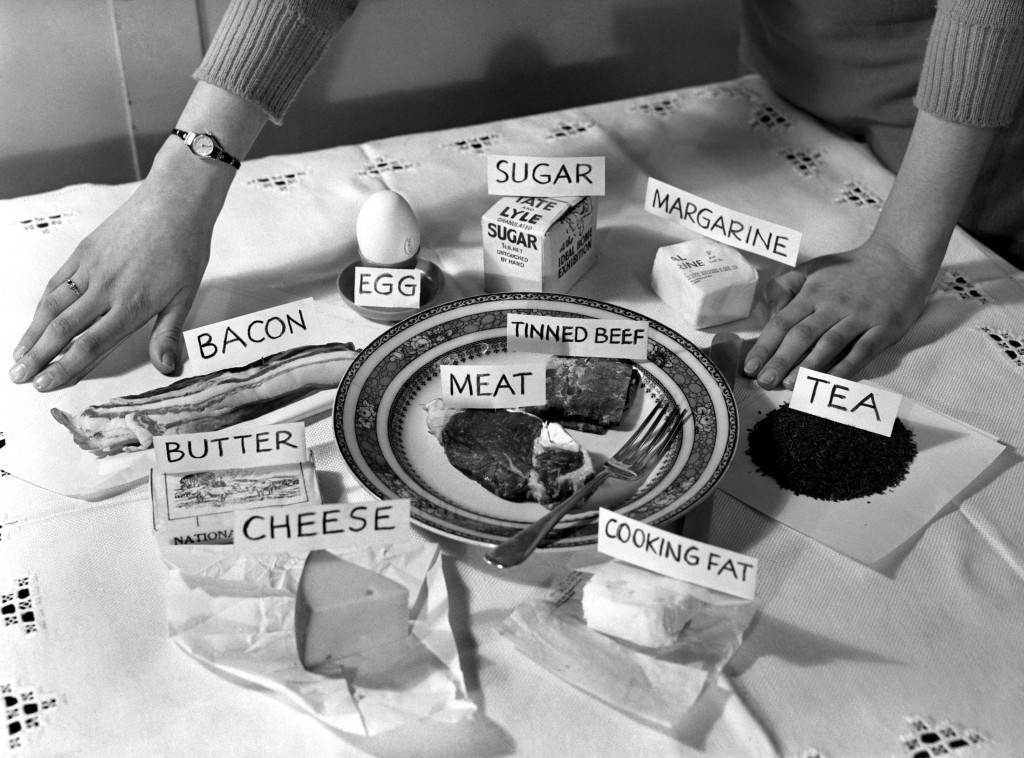
"Government cheddar" and the INGSOC tyranny of cheese


Yum Yum!

Having spent most of my childhood just a few miles from Cheddar in Somerset, from which that type of cheese originated; I was until recently unaware of one of the most crass instances of Big Government socialism I have encountered. 

During World War II, the heavy boot of central government control descended onto the neck of UK farming and food production - from whence it has never been lifted. 

And one of the first actions of this command economy socialism was to wipe-out many hundreds of historical and locally varieties of distinctive local cheeses; and force all milk producers to supply a handful of factories making a single uniform type which people called Government Cheddar. 

The excuse for such inefficient and unproductive tyranny was 'fair rationing' - and this maintained the practice for about nine years even after the war had ended! (And would probably still be enforced on the masses, if not on the rulers, had the socialist government had its way.) 

But, after such wholesale annihilation of centuries of tradition; it took several decades before British cheeses revived and recovered to anything like the current level - when there are probably many hundreds to choose from, from almost every region of the country.  


The story reminds me of why George Orwell got the idea of 1984 - not so much from the Soviet Union - as from the UK wartime government; with its tendency to impose drab, moralistic, oppressive controls on the populace - under cover of 'fairness' or 'the public good'.

There has long been a significant slice of the British people who are eager for such restrictive policies, and plenty of mini-tyrants keen to oblige them; as we have more recently seen with birdemic lockdown/ distancing/ masking/ pecking program, fake-justified by 'health'; and the ongoing program of tedious economic destruction, fake-justified by 'preventing climate change. 

Luckily, there are other Brits (mostly English, and middling sorts of people - especially the self-employed) with a more independent and sensible traditional attitude; who will push-back in whatever ways they can. 

It is to these people - certainly not to our rulers or their lackeys among the intellectual class! - to whom we owe such wholesome pleasures, freedom and dignity as yet remain to us. 


Romantic Christian audio lectures at New World Island

For those who sometimes prefer listening to reading; I have put a link into the sidebar of the New World Island YouTube channel; which takes a selection from the Romantic Christian blogs listed above, and makes them into audio-lectures.

The prose is 'read' by the familiar Kindle test-to-speech robot called, I think, Brian; who has an English accent - and pleasing ambient music has been added to the soundtrack. 

This venture has been done by that same indefatigable, workaholic, Trojan beaver techie who also set-up the invaluable Synlogos.org blog aggregator; as well as the New World Island aggregator that provides a more detailed focus on the Romantic Christian content.  

To him I say - Thanks very much for your efforts and commitment! 


The superficiality, triviality and short-term expediency of Western Elites

Yesterday I listened to a video in which political commenters Gonzalo Lira and Alexander Mercouris were discussing the Western Elites - i.e. the leadership class: and how they had declined, across about half a century, to the current very low level of superficiality and short-termism. 

GL and AM were not able to link this symptom to its spiritual roots - although they did sense that the phenomenon was due to the Western leaders (especially) actually being not true leaders but puppets of globalists, whose loyalty was to these globalists rather than to their nations. 

(i.e. Western 'leaders' are in truth merely middle managers; in a world-wide bureaucracy of which the masses are ignorant of the identities of the genuine leaders. Their middle manegrial role is, indeed, evident in the personalities and (ahem...) capabilities of Western national leaders.)

But GL and AM did a good job of describing those symptoms; and others, such a total incapacity even to understand other world views (instead projecting their own extremely cynical selfishness onto everyone else - such that genuine patriotism, religiousness, and long-termism are utterly invisible), their dishonesty, and their complete absence of any vision or purpose for their societies. 


The division of the world nations that has been triggered by the Fire Nation war has revealed that this collapse of leadership is a mostly Western phenomenon. 

AM described the stark difference in attitudes and priorities between the two sides of the recent international divide that is evident nowadays, whenever world leaders gather to meet and plan. 

He says that the disgust and disdain of the non-Western leaders for the trivial 'showbiz' antics of their Western equivalents is plain, and increasing. 


What GL and AM both miss, as I said, is that the problem goes much deeper than incompetence, lack of empathy and covertly misplaced loyalties; and deeper also than the corruption of the Western mass populations. 

The problem is that the Western elites serve powers that are, or are themselves, actively evil

They are not merely misguided, insensible and self-deceiving; leading unintentionally to bad outcomes -- instead the Western elites actually desire and seek bad outcomes. 


Many among the elite desire to make the whole world a totalitarian uni-state of omni-surveillance and micro-controlled behaviour and thinking. 

And increasing numbers of them are personally-motivated by sheerly destructive spite directed against their (ever expanding list of) enemies.  

Indeed, the elite 'morality' (such as it is) is an inversion of reality and truth - they want a world of lies, ugliness and sin; of mass suffering, fear, resentment and despair (i.e. they want this for others). 


Thus even astute and critical secular analysts such as GL and (especially) AM; are actually blind to the most important things in the world; in the sense that they sense the surface ripples, but are unable to identify the deep currents that cause them...

Because the currents that drive material change in the world - globally, nationally, locally, personally - are themselves spiritual in their origins and purposes.


Note added: I should make clear that, so far as I can tell, all of the nations of the world are on the same downward path towards the agenda of evil; but at different rates, and some nations are much further along that path than others. 

During this past calendar year, there has apparently been a small but significant and hopeful reversal of down-sliding in the Fire Nation. This is due to three decades, and continuing, of Orthodox Christian revival; bringing movement towards the earlier Byzantine polity of (aimed-at) harmony and integration between State and Church

If so; this process has a long way to go before a stable, top-down, Christianly-led social structure is achieved... If indeed such an atavistic restoration is possible - given the evolutionary development of Man's consciousness towards individuality of agency and personal responsibility for salvation and theosis. 

Such a reversal toward 'medieval' structures is not possible in The West, I am sure. We surely need to embrace Romantic Christianity and aim at Final Participation; if we are to avoid mass spiritual damnation. However, it may be that other peoples have a different destiny.  

Monday, 5 December 2022

Ben Stokes and the difference great leadership can make

We in The West inhabit a world of institutional mediocrity - where a mixture of over-promoted middle managers and psychopaths are in charge of global, national and functional institutions. 

There are very few good, and no great, leaders in mainstream public life...

The exceptions may be found in some competitive sports. Here we can see the truly vast difference that great leadership can make when compared with the usual poor-mediocre standards.  

Until last summer, the England cricket Test Captain was Joe Root; who is one of the greatest modern batsmen - but a poor captain. 

Last summer, Ben Stokes took-over, for lack of any alternative; and turned-out to be one of the greatest international captains anyone can remember. 

Working with essentially the same group of players - and supported by a new coach who he gets on well with (New Zealander Brendon McCullum); Stokes has converted England from a team that almost never wins, to a team that almost never loses


England Test Match Cricket record since 2021 

W=Win 

D=Draw

L=Lose

Starting from 2021 - Joe Root: WWWLLLDLDLWLWLLLDLDDL... 

From Summer 2022 - Ben Stokes: ...WWWWLWWW


Several of these victories - such as that today in Pakistan - have been among the most remarkable in Test Match history; and done while playing an extremely exciting, sportsmanlike - and happy! - style of cricket. 

Such is the difference made by a great leader (which, obviously, includes the power to do what needs to be done)

Imagine, now, what might have been possible if such leadership had been introduced and supported in other areas of institutional life! 


(Well, actually you don't need to imagine: there is a current real life example, but not in The West: I mean the Fire Nation.) 

Given the gross inadequacy of what most people believe; why don't more of them become Christian?

It really is amazing how so many modern people cling to a world view that offers them literally nothing!


...A world view that describes a universe without purpose or meaning - where things happen only from some mixture of rigid determinism with randomness. 

A human life that comes from nowhere and ends in utter extinction; and where 'morality' is (somehow!) both a thing that has no objective basis and gets made-up and changed at will - yet at the same time is overwhelmingly important, such that anyone who breaks "today's taboo" deserves to have his life destroyed. 

Clearly, nobody could actually want such a world view to describe reality; yet (probably) a billion and more people operate on that basis (whatever superficial religiosity they affect) - presumably because they have become convinced that it is and must be true. 


This is the nature of sin for modern Man

Sins are the consequences of turning-away-from, rejecting, God's creation and destiny for the world and oneself. 

Modern Man is hardly aware of 'traditional sins' - especially not those related to sex. He is also unaware of his own habitual and strategic dishonesty, unconcerned about greed, sloth, etc.

But modern Man is made miserable by consequences of sins such as loneliness (alienation, cut-offness from life and the world), fear (angst, mistrust of the universe), and despair (hopelessness). 

Modern Man does not recognize these as sins - but he is made deeply miserable by them; and one might have supposed that such intractable misery would lead him to seek relief in the positive and optimistic world view of Christianity.  


Instead, however, modern Man seeks relief from what he perceives as a multitude of specific miseries - with tactics such as forgetting-himself by immersion in work or social life (travel, tourism etc); in relationships and thoughts of sex. 

And especially the mass media; and in a therapeutic attitude to life ('healthism') that hopes for relief from (a multitude) of physical and psychological problems, from a range of medical and other therapeutic sources (including psychotherapies and social engineering). 

The globally-mainstream atheist-materialist world view is a kind of Leftism for this reason: its morality is rooted in the double-negative purpose of alleviating-suffering - my means of a vast spectrum of socio-political, inclusive of 'health', interventions.  

One of the deepest and most urgent reasons for opposition to religion, is that religious restrictions and prohibitions are regarded as interfering-with these above tactics for alleviating the miseries of life - thus the fear that religion would make life unbearable. 


In sum: People have painted themselves into a corner where they have pre-defined life and reality as futile; and then they are trying to prevent themselves from remembering and realizing this! 

Understandably; these tactical palliatives are not fully effective all of the time. Distraction is unable to make life feel worthwhile, given the underlying and pervasive conviction of hope-less-ness.

Yet it is a fact that this whole 'modern problem' is self-created; because we each choose our own fundamental convictions (i.e. our metaphysical assumptions) - or else we choose not to choose, and to accept whatever society feeds-us! 

Either way; whether we acknowledge our own choice, or passively choose to follow orders - ultimately our choice is still our personal responsibility. 


So, the situation (as I well recall it from the decades when I was a believer in the mainstream modern world view) is of being-in a nihilistic situation, in which - once nihilism has been internalized and accepted as reality - there is apparently no possible theory or evidence that can convince us of anything better

Because, in a purposeless and meaningless universe, nothing means anything, and everything means nothing


What is a possible escape from this inevitable despair, and to a better world view?

That is the situation of one important type of the potential modern convert; and I think it can be seen that The Church (any church) - with its mandatory and complex "package deal" combination of beliefs and doctrines, requirements and rituals - is not an answer to the modern Man's deepest and most intractable problem. 

What modern Man actually needs; is a different fundamental set of assumptions, regarding the nature of reality (i.e. a different metaphysics). 


If Christianity is to be recognized as a possible and valid escape from known-sin and into positivity and hope; then it needs primarily to be concerned with the world-view of the individual Man; and this needs (certainly initially) to be distinguished from the package-deal offerings of any actual or potential Christian Church-ianity. 

In other words; modern Man needs to be able to look-out-from his alienated despair and perceive a pure, simple, clear and metaphysical Christianity.   

A choice of Church may, or may not, come later. 

But metaphysics is the first and essential step.  


Sunday, 4 December 2022

Why don't people abandon wrong ideas? The memory hole, and self-hypnosis by word-webs

I am fascinated by how people cleave to wrong ideas - despite everything. 

I regard myself as something of an expert on this subject! Because I have had many wrong ideas in my life (presumably I still do); and have sometimes taken a long time (decades...) to abandon them and acknowledge their wrongness - yet I still remember 'what it was like' to have these ideas, and to hold to them.

In other words; my claimed expertise comes from the fact I have changed my mind, quite often and often deeply, about fundamental matters concerning the nature of reality (i.e. metaphysics), and that I fully acknowledge this fact. 

Whereas most people never change their minds about anything; and when they do - will not admit they have done so!  


When I do finally abandon a long-held but wrong idea (such as atheist-materialism); I know for sure that it was wrong, exactly because I see it from both sides. 

Typically, I have taken my wrong ideas very seriously, and have pushed them hard - before abandonment. (e.g. I was a proselytizing atheist-materialist; and tried hard to live in accordance with my convictions).

Therefore; after abandonment - I know experientially why I believed it and what is wrong about it. 


This is the state that some call 'certainty'; when one knows something, and is not easily shaken-off or pushed-from that knowledge - because the new knowledge includes that the person trying to change ones mind is unable to see all around the question. 


[By the way; this does not (at all!) mean I can persuade others to do the same, to repeat my own trajectory - on the contrary, I am more than ever sure that this is something each must do for himself. Because arguments that were (and perhaps still are) decisive for me; may be incomprehensible or off-centre for others; and can nonetheless always be picked-apart by the skeptical resister, shown to be incomplete (requiring further assumptions) and relativized -- simply because all possible arguments can be thus dismissed.]   


There are - it seems to me - innumerable ways in which a person can stick to belief, despite... But a couple are of particular interest to me. 

One is that people have been habituated by the modern world - in particular the mass media (and now social media) to an overwhelming flood of constantly changing stimuli - 'facts', opinions, arguments, theories, images etc. 

The result is that people don't take any of it seriously - which means that they continue to believe whatever is consistent with their deepest assumptions about the world. 

In other words, immediate reactions wash-out very quickly; and over the long-haul people believe what fits their metaphysical assumptions - and everything else just sluices over them. Yet most people do not know their own metaphysical assumptions, and indeed deny that they have any! Instead they assert that these assumptions are simply true-facts about the world. 


Therefore, people just continue to believe... whatever fits with whatever unconscious, underlying assumptions that have passively-absorbed from 'society and culture'. Everything else just passes-through their minds; even facts, theories, 'evidence' that they 'believed' at the time it was presented. 

This, I think, is what accounts for the 'memory hole' phenomenon - which is as real for individuals, as for the mass media. 

In other words, dissonant knowledge is simply forgotten, and may later be denied; because it cannot be made-sense-of in terms of the underlying and unconscious/ denied assumptions. 

*

Another, much more intellectual, way of holding onto wrong ideas; is a kind of thinking, discourse and writing that I call 'self-hypnosis'. 

This is what makes possible sustained wrongness among the most highly educated, intelligent and idea-orientated sectors of the population. It is, in my view, what created and sustained the centuries-long mistakes of theology, philosophy, law, science, medicine, and so forth. 


What happens is that an intellectual comes-up against a problem: he wants to believe several things that cannot be fitted together by normal, common-sense reasoning. 

He wants to obey some authority, adhere to some principle or rule, or say that some-thing exemplifies several properties/ attributes which seem incompatible.  


Of course, at lower levels, intellectuals just make wrong arguments - with false-steps (non sequiturs), incorporating false evidence etc. Just generate sound bites. Just critique ad hominem and assume that they have thereby dealt with the argument. Just avoid defining and defending their own beliefs; and attack some aspects of whatever they disagree with (often straw man projections) - on the (unstated) conviction that this proves already-existing assumptions... 

But at higher levels, the intellectual may instead weave himself an hypnotic word-web, cast a conceptual spell that draws himself into an accepting (an exalted) state of mind... 

He draws into consideration all the elements that need to be combined; he alludes to possible causal pathways or networks, to multiple considerations of qualitatively different kinds... The aspects that require reconciliation are introduced, juggled and balanced into patterns, compared and extrapolated... 

And at the end of this (which may continue for hundred, thousands, tens or even hundreds-of-thousands of words!) he has made himself believe the incompatible, the empty, the contradictory. 

In effect the high-level intellectual hypnotizes-away his own doubts about some idea, theory, 'fact' - he 'squares the circle', dissolves incompatibility, synthesizes a medium within-which all makes sense


To my mind; all apparently makes sense because of the effect of self-hypnosis. 

The intellectual generates a diminished state of consciousness, an impaired state of delirium, and therefore can sustain his belief in ideas that would otherwise be recognized as wrong.   

I regard a great deal of Christian theology in exactly this light: as acts of self-hypnosis. 

And the sustaining of wrong and irrelevant theological ideas across the centuries, and among even the most able intellectuals (theologians, bishops, teachers etc); has been made possible by the creation of these hypnotic word-webs by leading intellectuals (including geniuses); and the entering-into and acceptance-of these hypnotizing intellectual structures by following generations. 

Thus the original scheme of self-hypnosis, is sympathetically attuned-to, participated-in, and accepted-by others. 

Self-hypnosis becomes other-hypnosis.  


So, the same - ultimately-hypnotic - phenomenon; repeats itself in smaller ways and at lower levels, in the dissemination of metaphysical assumptions and world-views. 

Sometimes the intellectual is mainly trying to convince himself, to maintain what he regards as a necessary belief. 

At at other times the intent is manipulative or (to put it euphemistically) educative. The word-web is then directed at hypnotizing others, at the ignorant or at 'doubters' - and the web-weaver (the would-be hypnotizer) may not himself be in the delirious state of self-deception; but instead stands outside the web - trying to achieve an hypnotic result with the greatest effect and economy. 


Of particular relevance to the situation of 2022 among Christians is that Christianity has been a victim of web-weaving theology - the kind that covers incompatibilities and contradictions - from very early in its history; apparently from soon after the ascension of Jesus!

Once one can recognize this style of hypnotic-self-deception; one can see it at work in a great deal of Christian theology - in the Bible itself, in the early theologians and church fathers; as well as the modern intellectuals and pastors through-whom these texts of the past are being-transmitted. 


You must have sensed it yourself? 

Somebody - whether a Christian or not - asks a simple question, or observes an (apparently obvious) incompatibility or contradiction; and the response... is to try and spin an hypnotic word-web!

...At the end of which, there seems to have been (or, at least, that is what is stated) No Problem At All! 

Difficulties are , not solved; but dis-solved, by delirium. 


As I said; this has been going on for centuries - and now we found ourselves in a world where (if we refuse to be hypnotized, or to engage in hypnosis!) Christianity is a state of self-denying catastrophic incoherence and collapse; with corrupted and evil-seeking churches confronting a metaphysically-secularized and evil-assimilated mass of people - and yet still deploying the same old hypnotic-word webs to address desperate spiritual needs, describe what Christianity is, and assert what it will 'do for you'. 


Christians need to shake themselves awake from such self-induced trance states that deny the realities, and continue to push failed solutions to real problems, neat answers to unreal questions.  

We need to stop trying to fool-ourselves by such stale mind tricks; because only with a clear head, may we then be able to help those others who seek help - as they so urgently, so profoundly, need helping. 


Saturday, 3 December 2022

What is the basis of Christian morality? Or: Nothing Good is ever wasted.

Because (following the Fourth Gospel teaching) I believe that Christianity is - at core - extremely simple: a matter of commitment to loving and following Jesus Christ (with 'following' understood as essentially being led by Him through mortal-death to eternal resurrected life) -- this belief leads to the question of how such a next-world-aiming faith can guide our behaviour in this life?

The question is answered because Christianity builds-upon personal theism; and a conviction that God is the creator and we his beloved children. 

And that God wishes to raise each of his children to the highest divinity that each wishes to attain; with divinity being understood as loving creation - creation in the context of that love which harmonizes each individual's effort with that of God's primary creation - and of other Men's creation. 


Traditional Christians are - no doubt - concerned that this conception of Romantic Christianity - based on individual discernment, motivation and responsibility; and with its core aims "not of this world" - has no place for the morality that has so dominated conceptualization and practice of Christian churches for most of two millennia.  

Romantic Christianity perhaps needs to make more explicit how such an individual spiritual process - aiming beyond death, and moving away from the top-down legalism of traditional church-based, top-down Christianity - could, even in principle, lead to 'good conduct' in mortal life. 

Such is the aim of this post. 


In other words: I am to explain how we get from a primary commitment to Follow Jesus Christ to Salvation - all the way down to the here-and-now level of moral behaviour in the multitude of testing and tempting ethical dilemmas of modern life in 2022.

For instance; how do we get from the Heavenly perspective that is 'not of this world'; to the mundane details of what we think, say, do and believe in context of living in an exceptionally corrupt and evil world?  

Then, how do we know what we should and should not do; and then how may we prevent the here-and-now, immediate pressures of expediency - of short-term and selfish benefit - from routinely overwhelming the eternal goals of properly Christian behaviour - as they so obviously have done in all the major Christian churches?


The basic insight is that morality derives from a personal knowledge of how individual behaviour harmonizes with God's existing creation and God's creative motivation

Goodness is that which - by love - is in-harmony-with divine creative intent; and evil is that which opposes God's creation. 

We may discover and know such harmony by that individualized guidance which is accessible to us from consulting our own inner divinity ('conscience') - which every Man has from being a child of God. And also by external guidance from personal interaction with the Holy Ghost - who is potentially accessible to all Christians: all those who have committed to follow Jesus - to accept his gift of resurrection into life everlasting. 


The 'accuracy' by which we might know what to do depends on the genuineness of our own motivation; on the sincerity of our following of Christ.

But - assuming he knows what he ought to do; what then motivates an individual person to resist, to go against, the dictates of short-termist, selfish expediency - in a context when that pressure of expediency is immediate and present, while the rewards of true morality are delayed until after death? 

What determines the choice to affiliate to God's purpose - rather than, expediently, to go-against it?

This is, of course, the test of Faith; because the powers of evil will probe and apply pressure to exactly this point - will contrast the sureness and certainty of current expediency with (what is described as) the vagueness, speculative nature, distant and merely-probabilistic hopes deriving from what 'might' happen after death...

Will assert the triviality and futility of a single and solitary person doing-the-right-thing - only for it to be unnoticed, ignored, punished, or forgotten; when the whole vast System will do otherwise, and regardless. 

(Why - the powers of evil ask - waste effort making such a pointless, dumb, insane gesture?)


In the first place; I think we will only be able to resist these pressures and pass such tests on the basis of a faith rooted in conviction of our own salvation

Whereas, for most of its history, Church Christianity has instead emphasized the uncertainty of salvation, and counseled strongly against presumption...  

But I think we instead need to regard salvation with utter confidence; confidence that - so long as we really want salvation, we can have it.  

Rooted in such confidence, we can then recognize this mortal life as a time of learning - the eternal benefits of which will come to all those who desire salvation.  


In summary: The powers of evil will assert expediency on the basis that salvation may not actually be true, that it may not happen to us personally - and, anyway, if salvation is really-real and we attain it; the microscopic incidents of this mortal life can (surely?) have no bearing on our condition after death. 

To resist such blandishments requires, therefore, an understanding that nothing Good is ever wasted

That every Good act (thought, word, deed), that is done from Good motivations and in harmony with divine creation; and no matter how apparently small and insignificant and ineffectual it seems from this-worldly perspectives -- 


Every Good act will be permanent - will be woven-into the texture of creation. And this will happen immediately - and forever. 


Every Good act will be permanent exactly because we can be confident of our own salvation; and we can be confident that our loving God has care for each of His children; and will arrange each life such that Good acts are made part of eternal reality. 

This is exactly the nature of that learning for which mortal life is sustained.  

We need, therefore; not just confidence in salvation; but confidence that all the tests and trials of this mortal life - all occasions when immediate expediency opposes our alignment with God's creative motivations - are exactly those occasions when we can personally make an eternal difference for the better. 


In other words, properly understood, the here-and-now benefits of expediency can be opposed by the here-and-now benefits of doing Good. 

And we may be confident (as confident as our faith) that eternal Good, no matter how small that Good, is infinitely more significant than whatever temporary and contingent, selfish benefits may accrue from rejecting God and opposing divine creation. 

The keys seem to be Faith-in and Love-of God, active in this earthly mortal world as well as beyond; and that Hope which derives from confidence in Christ's gift of salvation.

And also our knowledge that nothing Good in mortal life is ever lost - but is instead taken-up into eternal divine creation; which we shall personally enjoy and contribute-towards in the Heavenly life everlasting. 

Friday, 2 December 2022

What is the purpose of incarnation for evil-inclined souls? My own experience of choosing salvation

I have said, speculated, that the reason for the unique extremity and pervasiveness of evil-affiliation in these present times - especially the high prevalence and social dominance of value-inversion - is probably due to the nature of those souls being incarnated in recent generations

In other words, there seem to be a high number and proportion of people born who already have a tendency to reject God, and the gift of resurrection - such a tendency being part of their original makeup, and having continued in pre-mortal spirit-life. 


But why do such souls incarnate at all? 

Why allow evil-inclined souls to be incarnated; given that such souls may create and sustain the kind of world that we now inhabit: where global and national institutions and the mass media combine to be a kind-of machine for damnation...

Well, these are Not matters of predestination, because all Men have agency; any individual soul may repent and choose to join-with the side of divine creation. 

So, incarnation offers such souls a chance - and God (as creator) will engineer each life to provide experiences, learning from which may lead such souls to repentance. 

It seems that this mortal incarnate life - with its condensed consciousness providing a located-perspective on a world of constant inner and change and variation - is a better place for learning than pre-mortal spirit life. 


Indeed, I regard myself as exactly one such evil-inclined soul. 

I rejected God and became an atheist at a very early age; I think six years old - and with an eagerness and decisiveness that suggests it had 'always' been my unconscious intention to cut-loose from the solidly Christian framework within which I lived at school (although not at home). 

Without this mortal incarnate experience (if I had remained a pre-mortal spirit); I would have probably been something like a pantheistic pagan. That is, I would have rejected the opportunity to join-with God's plan to raise up Men towards divinity and a life of co-creation. 

Without this mortal experience; I would probably have 'handed back the ticket of consciousness and agency', and lapsed back towards a passive, un-personal state of mere Being: something like the ideal Nirvana of Eastern religions.  


But being incarnated, and entering-into the world as-is, also brought the hazard that my rejection of God's plan led instead to an incrementally-increasing affiliation (overall and substantial, although never whole-hearted) to the side of evil - as can be seen from many of my published writings before 2009. 

And I compounded my personal rejection of God and embrace of this-worldly evil by my writing (and teaching) - so, by the time I started to become a Christian, I was in a bad way - spiritually! 

...Not so much in terms of being a spectacular and Luciferic 'sinner' of lusts and greed - but certainly in terms of affiliation and motivations; and in my active and public support of the Ahrimanic System.  


And what of this current System of damnation, and the fact that this world is mostly ruled by evil affiliated Men who serve demonic powers? 

At an aggregate 'group level' - what is going-on from God's point of view? Why might God allow such a situation to develop and continue?

In particular; how can such an appalling general situation be of benefit to incarnated souls, many of whom are apparently - like me - disposed to reject the hopes of divine creation and the chance for eternal resurrected life? 


My best answer is the explanation of 'things coming to a point'. That Good and evil are increasingly-more separated (more polarized') and thus evil is more starkly revealed. 

Evil here-and-now is more absurd, as it becomes value-inverted, more clearly tyrannical, more obviously destructive.  

The excuses, or rationalizations, for evil have become thinner, more perfunctory, more labile and self-contradictory.


Of course, despite all this, most people still don't see through to what is really happening! 

Yet, if we accept the premise that the world is populated by especially evil-inclined souls; souls that are unusually (in historical terms) unusually hardened and fixed in their rejection of divine creation...

Then, from this point of view; we can regard the contemporary world as allowed by God because it represents extreme rescue measures; a spiritual shock designed to startle souls thrawn to evil into a sudden appalled recognition of what horrible things they are thinking, saying, believing...


Mortal incarnation is therefore a high risk business... 

Because it is a chance for learning: it is thereby a chance for learning evil, as well as Good. 

It is a chance for evil-inclined, God-indifferent souls to get spiritually worse, as well as to get better. 


This world we inhabit is a world planned and controlled by evil-inclined souls; so it cannot really be good of itself and overall. But, nonetheless; God has made use of the world's evil to provide an environment in which the spiritual war has been brought close to the surface; a world that serves the function of providing extreme learning conditions. 

Perhaps towards making a 'last chance' situation for even the worst of sinners; in which - for a moment - clarity is attained, and a final decision made. 

For some souls - such is apparently their only realistic possibility of avoiding their own prior-choice of damnation. 


Thursday, 1 December 2022

For Heaven's sake, this is not an accident! "They" are doing it on purpose!

No matter how much evidence, every particle of it pointing in the same direction; and no matter that nothing is ever learned from failures, disastrous policies are never repented nor reversed - still the majority of people (including intellectuals and commenters of the 'secular Right') continue and continue to explain the approaching catastrophe and mass death in terms of stupid mistakes, lack of foresight, self-deception...


It is literally incredible to see each and every item of the news and planning subjected to individual microscopic analysis of its flaws and illogic, extrapolations of its dangers, and the sufferings it will inflict - without ever putting together these hundreds upon hundreds of items to see the obvious pattern and the simple motivation behind them: to do evil, to cause pain, to kill...

And above all to induce Men to choose damnation en masse - from fear, resentment, despair, and the inversion of true values.  

This is a spiritual war; and evil has the upper hand in The World. 

It really is absolutely as simple as that. 


As Rudolf Steiner pointed-out a century ago: atheism is an illness, specifically a mental illness - a form of insanity. And if you cannot perceive the global spiritual war and the purposive evil of the Establishment; then you too are actually an atheist and are literally-insane - whatever religious affiliation you may affect or identify-with. 

"Your expression gets warped and destroyed": Or, why Establishment cultists reveal their badness in their faces

From 2:40 onwards

Sir Despard Muratroyd and The Chorus 
From Ruddigore by Gilbert and Sullivan

Oh, why am I moody and sad? 
Can't guess! 
And why am I guiltily mad? 
Confess! 
Because I am thoroughly bad! 
Oh yes – 
You'll see it at once in my face. 
Oh, why am I husky and hoarse? 
Ah, why? 
It's the workings of conscience, of course. 
Fie, fie! 
And huskiness stands for remorse, 
Oh my! 
At least it does so in my case! 

When in crime one is fully employed– 
Like you – 
Your expression gets warped and destroyed: 
It do. 
It's a penalty none can avoid; 
How true! 
I once was a nice-looking youth; 
But like stone from a strong catapult - 
A trice – 
I rushed at my terrible cult – 
That's vice 
Observe the unpleasant result! 
Not nice. 
Indeed I am telling the truth! 

Oh, innocent, happy though poor! 
That's we – 
If I had been virtuous, I'm sure – 
Like me – 
I should be as nice-looking as you're! 
May be... 
You are very nice-looking indeed! 
Oh, innocents, listen in time – 
We do, 
Avoid an existence of crime – 
Just so– 
Or you'll be as ugly as I'm– 
No! No! 
And now, if you please, we'll proceed...


Comment: Aside from the wise moral teaching (concealed in the parody of Victorian melodrama) - more relevant now than ever; this song is a superb example of Gilberts cleverness and wit in the interaction between soloist and chorus. And Sullivan's music gives me goose pimples when the third verse moves into a soaring melody. 


No Good Jobs anymore... The impossibility of Doing Good in a general, vocational or socio-political fashion

I can recall as a teenager trying to choose a future career, with the idea of picking one where I would Do Good. I had a short-list of supposedly-Good jobs, that included being a doctor, a research scientist and creative artist. 

I became a doctor eventually, later a research scientist, studied English literature (explicitly trying to work with a creative kind of criticism and scholarship), and did some (more-or-less) creative writing on a frequent basis. 

All of which, serially, made me realize that these once-Good works were - at least in the late 20th-early 21st century - not really about doing Good. 

What Good these social activities did was partial, temporary, declining, and even (increasingly) inverting into net-harm. 


And anyway, from an atheist-materialist basis, there is no real Good that can be done - since Good is arbitrary and subject to redefinition and reversal. People can be made happier or more fulfilled... at a price, to some extent and for a brief time. 

Human suffering may be alleviated - but only somewhat and temporarily (because everybody dies, and some problems are too hard to solve) - and often at the cost of increased suffering in the long-term, or for other people. 

In sum; there is no path by which humans can really-do real-Good; and almost all of those who mistakenly believe their is such a path and they themselves are following it; can easily be seen (from a Christian perspective) to be on the side of evil - and doing actual harm to themselves and others. 

For example I mean those (mostly leftists) who are 'active' in political causes, charitable causes, 'health' services', 'education', Law and (pseudo-) science. 

These are - often - obedient servants of evil; whose corruption is so extreme that they have inverted their values; such that creating suffering, encouraging sin, inducing fear and despair, deleting meaning and purpose from life - all such actual evils have come to be seen as positive and constructive acts. 


Because the world of public discourse and institution is so corrupt and evil-affiliated; then there is no objective and material Good that anyone can follow - not even in the Christian churches. 

It was once the case that working for a decent church was genuine Good Work; but now the major churches (of the kind one can work for) are significantly (and increasingly) assimilated to the agenda of evil; and have taken on several or all of the core Litmus Test policies of strategic totalitarian corruption and value-inversion. 

All significant institutions of The West are corrupt and 'converged' - so that serving the institutional churches (by church-focused evangelism, church development and foundation etc.) are nowadays Not ways of Doing-Good. 


We may still Do Good in The West; but not by taking up the cause, or following the path, of any pre-established Institution: there are no longer any 'Good jobs' or careers. 

We must do Good starting from our-selves and with guidance from the Holy Ghost

We must, in other words, mostly work it out for ourselves; and any advice we choose to follow, requires to be selected and discerned - and not accepted on the basis of institutional provenance. 


Consequently, it would be expected that people who are really Doing Good will be doing specific and personal Good; therefore may potentially be found in a wide variety of places and situations (including a wide variety of churches)...

And such people are less and less likely to be concentrated in particular social niches/ institutions/ jobs/ religions/ denominations/ or congregations.